

 A Charm Adorns Your Face: Explorations of the Portrait
FADCOM students, under the guidance of Professor Alla Kondratova, present “A Charm Adorns Your Face,” an exhibition of portraits created in the Drawing II course, in which they explore human identity and expression using techniques such as graphite, charcoal, chalk, and colored pencils.
 POSCA Lab: From Text to Visual Interpretation
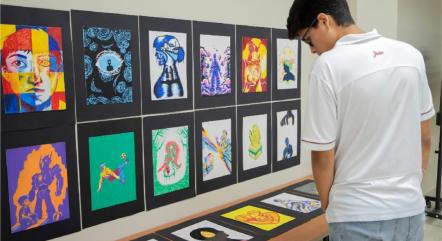
FADCOM students, under the guidance of professor Daniel Castelo, present “POSCA Laboratory,” a series of illustrated posters based on literary and narrative texts, created through processes of research, conceptualization, and graphic experimentation with acrylic markers.
 Expanding Geometries: Shape, Color, and Creative Exploration with POSCA Markers
Students from FADCOM–ESPOL, under the guidance of professor Billy Soto, present “Expanding Geometries,” a series of works in painting techniques that explores geometry, color, and graphic experimentation using POSCA markers, linking academic learning with the experience of exhibiting in public spaces.
 From concept to print: FADCOM students explore different printing systems
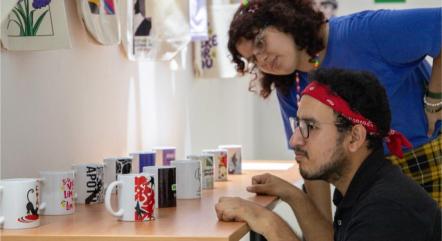
The exhibition “From concept to print,” curated by professors Antonio Moncayo and Franklin Guadalupe, features works by students in the Printing Techniques program who apply their graphic designs to T-shirts, bags, and mugs using DTF and sublimation, demonstrating how designs can be adapted to different media and materials.
 Paola Ulloa is conducting a research stay in São Paulo
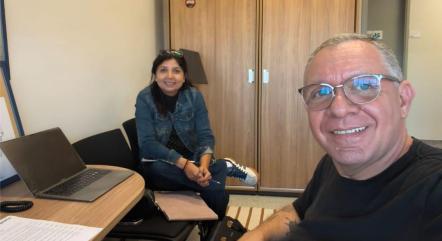
Paola Ulloa, a member of the FADCOM academic staff, is undertaking a postdoctoral fellowship in São Paulo, Brazil, to research the social media communication strategies of Latin American governments, thereby strengthening academic exchange and international collaboration.
 FADCOM Faculty Members Participate in the iPR Summit 2026
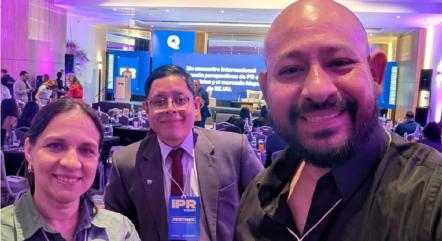
FADCOM faculty members Ariana García, Edgar Jiménez, and Víctor Cantos participated in the iPR Summit, an international conference on public relations, strategic communication, and marketing, where they exchanged knowledge and experiences with professionals from Latin America and the United States.
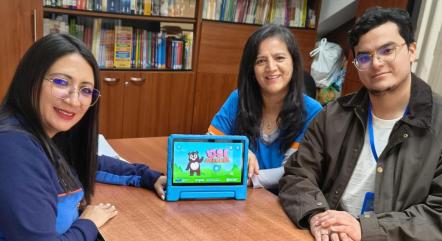 Michael Arce, a FADCOM professor, is conducting a research stay at the University of Azuay
Michael Arce undertook a research placement at the UDA as part of the Osi-Aprende Phase II project, bringing the social robot developed at ESPOL to CEIAP to carry out tests in a real educational environment and make progress with the validation of the prototype.
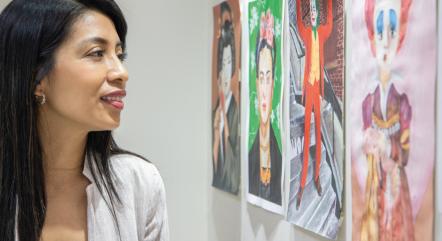 Face to face: different perspectives on the human face
FADCOM students present ‘Face to Face’, an exhibition organised as part of the Drawing II module, under the supervision of lecturer Alla Kondratova.
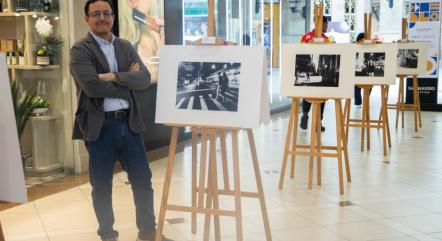 Daniel Castelo presents «Destination: New York, in Black and White» in San Marino
The Food Hall on the ground floor of the San Marino Shopping Centre in Guayaquil is hosting the exhibition ‘Destination: New York, in Black and White’ for two weeks. Curated by FADCOM lecturer Daniel Castelo, the exhibition brings together ten photographs depicting everyday life, the contrasts and the different ways of experiencing one of the most photographed cities in the world.
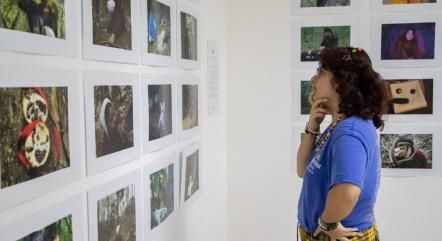 From the frame to the story: photographic narratives constructed in sequence
The exhibition “From the Frame to the Story: Photographic Narratives Constructed in Sequence” showcases the work of students on the Media Production degree course (Digital Photography module), taught by lecturer Daniel Castelo at FADCOM–ESPOL.