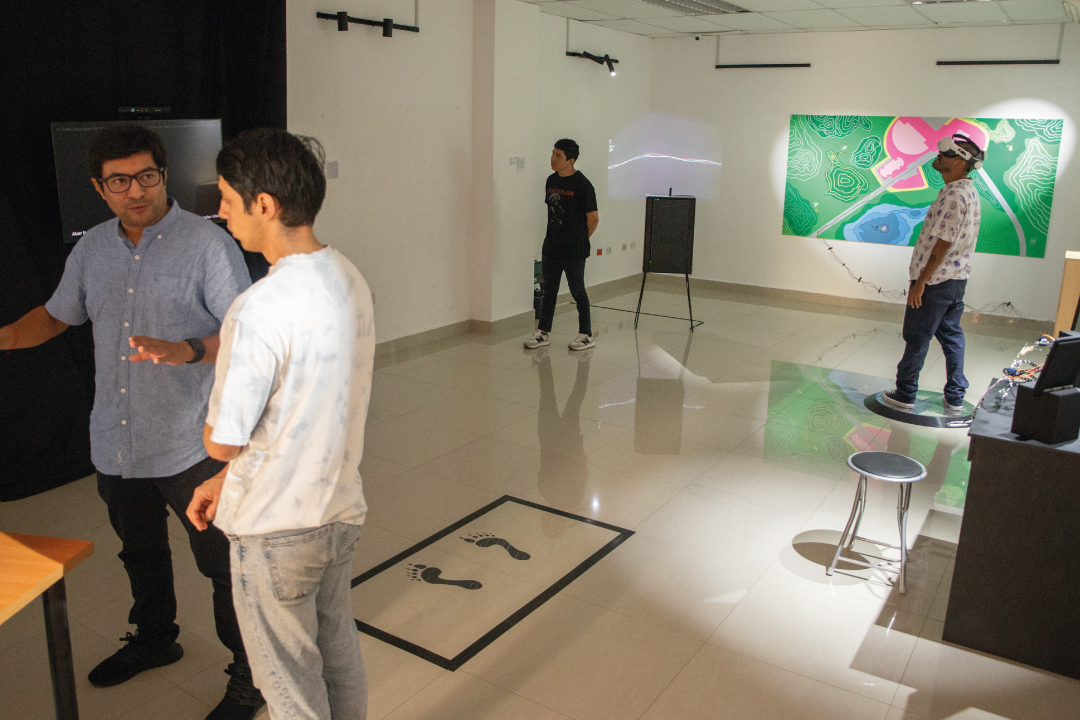


The Faculty of Art, Design and Audiovisual Communication (FADCOM) at ESPOL presents ‘El Gran Otro’, a new exhibition of projects developed as part of the ‘Artistic Laboratory’ module on the Master’s in Art and Technology programme, curated by Cristian Villavicencio, a lecturer on the module and an artist featured in the exhibition. The exhibition is being held in FADCOM’s refurbished ADC1 space.
The exhibition brings together works by seven students and artists who, using different artistic languages and methodologies, explore the relationships between art, technology, science, the body, memory, territory and interaction. The projects demonstrate different approaches to research-creation and reflect an academic process based on experimentation, interdisciplinary exchange and the collective construction of knowledge. Curated by Villavicencio, ‘El Gran Otro’ presents art as a space capable of engaging in dialogue with other fields of knowledge and questioning the ways in which we relate to technology, our environment and ourselves. The works incorporate resources such as artificial intelligence, virtual reality, sensors, creative programming, sound, biometric data and interactive devices, generating experiences that invite the public to observe, listen, touch, move and participate.
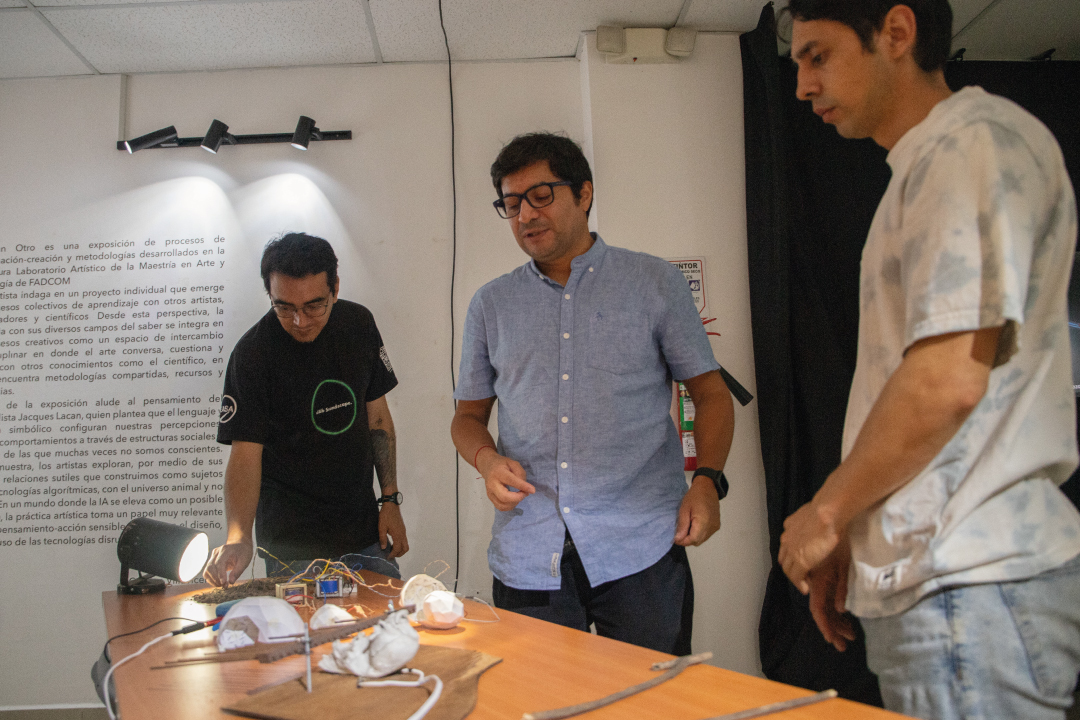
Among the works on show is ‘La máscara que llevamos’ by Llejo – Daniel Vallejo, a sound installation that explores masking and the processes of social adaptation. Through mirrors, a mask, mechanisms and a voice that commands and corrects, the work raises questions about identity and the ways in which we modify our behaviour to fit in. “Constellation of Resonant Objects 1”, by Christian Proaño, brings together objects found during his daily walks to explore their resonant capabilities and establish relationships between territory, absence, memory and sound.
The interaction between the body, technology and Artificial Intelligence is evident in “Voids… residues… thresholds” by Remigio Vásconez “R3M1”, an installation that uses motion tracking, visual programming and Generative Artificial Intelligence to transform the visitor’s movements into real-time visual flows. In “Pulso”, Darío Tomalá transforms the participant’s heart activity into a generative visual experience. Using a sensor connected to an Arduino, heartbeats are translated into shapes, movement and density, making visible what we can normally only feel: the rhythm of one’s own heart.
The link between art, technology and nature is evident in ‘Memoria Acústica del bosque ESPOL’ by Gabo Peña Zapatier. The installation transforms a mural into a responsive interface using piezoelectric technology. By touching the surface, visitors trigger sounds recorded in the ESPOL Protected Forest, turning the work into a living archive of the natural environment. Drawing on virtual reality, sound and physicality, Cristian Villavicencio’s “Anima Resonante” offers an immersive experience built around 3D-scanned pre-Columbian artefacts, vibrations, low frequencies and contemporary soundscapes from the Ecuadorian Amazon.
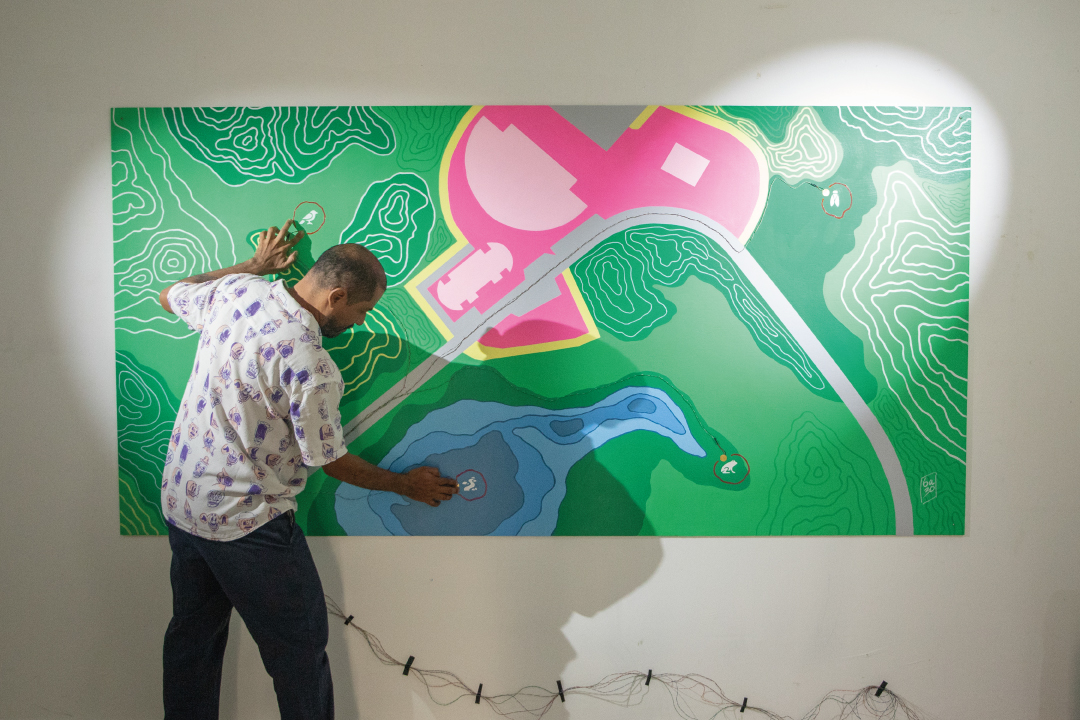
The exhibition also incorporates an element of accessibility with ‘Palparte’, by Carlos Alberto Samaniego Torres, a project that transforms photography into a tactile and auditory experience through reliefs, Braille, audio descriptions and pop-up elements. The work explores new ways of experiencing and understanding an image. Meanwhile, “CORDILLERA SONORA” by José Luis Melendres uses paint, sensors and sound to turn a representation of the Ecuadorian mountain range into an interactive experience. Through visitors’ footsteps, the work triggers stories about the lakes in the mountain range and messages relating to environmental care and recycling.
Taken as a whole, “El Gran Otro” presents different ways of approaching research-creation through art and technology. The works demonstrate how processes developed in the classroom can transcend academic experimentation and become proposals capable of generating questions, sensory experiences and new forms of interaction with the public. The exhibition is being held in the refurbished ADC1 space at FADCOM–ESPOL, which has undergone improvements to its lighting, furnishings and presentation to enhance the exhibition conditions and create new opportunities to engage with the Faculty’s artistic and academic output.
Rather than merely presenting results, “El Gran Otro” offers an insight into the exploratory processes developed within the Master’s in Art and Technology programme and demonstrates how dialogue between different disciplines can raise new questions about identity, the body, memory, nature and our relationship with technology. Thus, the revamped ADC1 establishes itself as a space for the circulation of proposals that bring together creation, research and experimentation, introducing the university community to new ways of understanding and experiencing contemporary art.
© Photography: Romina Gómez / Text: José Luis Castro