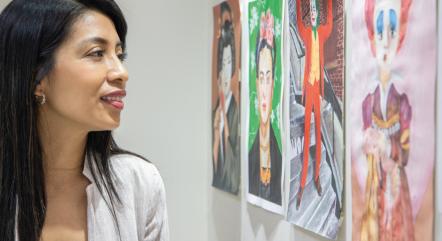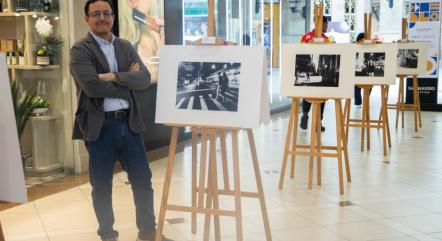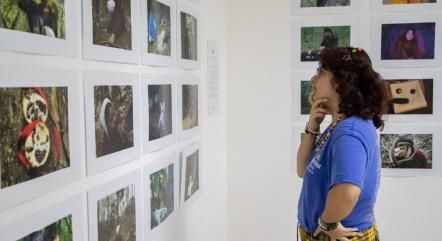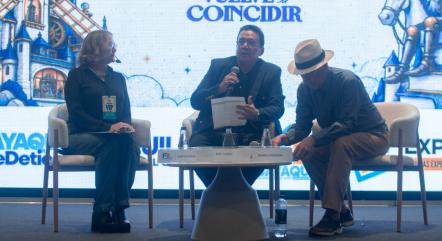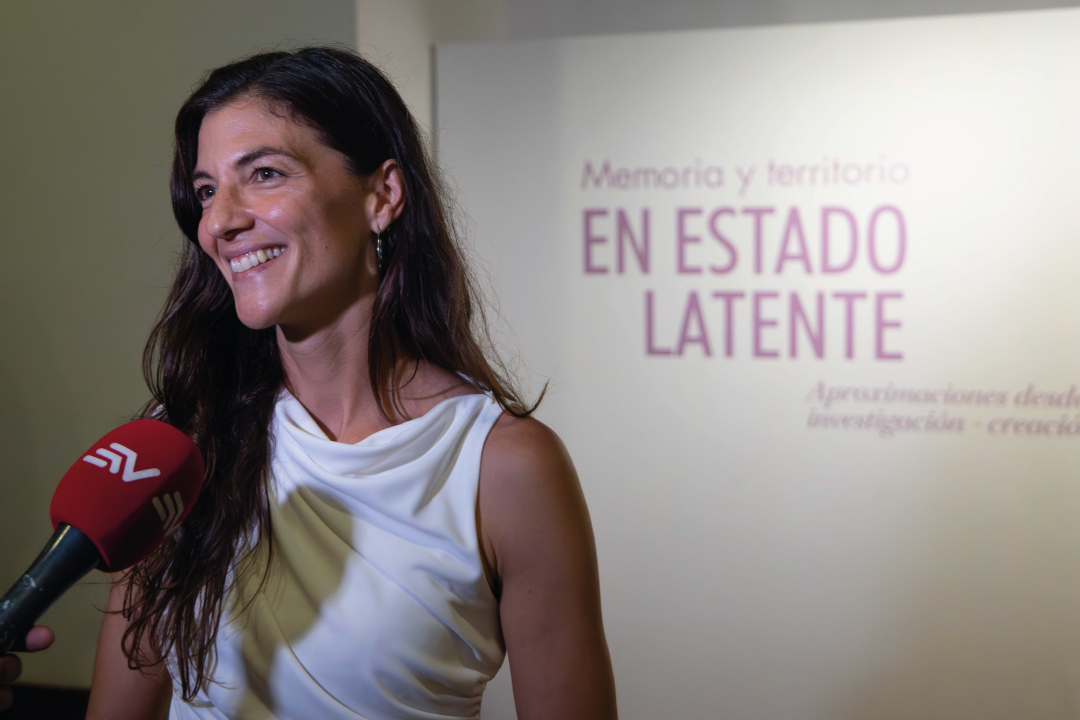


The Faculty of Art, Design and Audiovisual Communication (FADCOM) at ESPOL presents ‘Memory and Territory in a Latent State’, a collective and interactive exhibition bringing together six works developed through research, creation and action. The exhibition invites visitors to reflect on gender, cultural identity and the environment through experiences that connect the public with memory and territory.
The exhibition is being held as part of the ‘Artistic Project Management’ module, led by Lydia Navas, and brings together academic, research and creative processes linked to the Master’s in Art and Technology at FADCOM-ESPOL. It is curated by Johnny Alex Guerra Flores and Lydia Navas, with the participation of lecturers, researchers, students and partner communities.
The exhibition is organised around three thematic strands. The first, gender, brings together *Ágora de hilos* by Lydia Navas, Daniel Vallejo and Darío Tomalá, and *Voces que inspiran* by Lissenia Sornoza and Wilmer Macías Tomalá. Both works explore the experiences, voices and stories of women and make the public’s participation part of the creative process.
The second theme, cultural identity, presents *Píxeles de Memoria Popular* by Michael Arce Sierra and Adriana Márquez Ramírez, an interactive digital installation that draws on elements of popular graphic art; and *Tramas que despiertan* by Carlos Samaniego and Gabriel Peña, which combines weaving, voice, image and technology to explore the Guancovilca textile heritage.
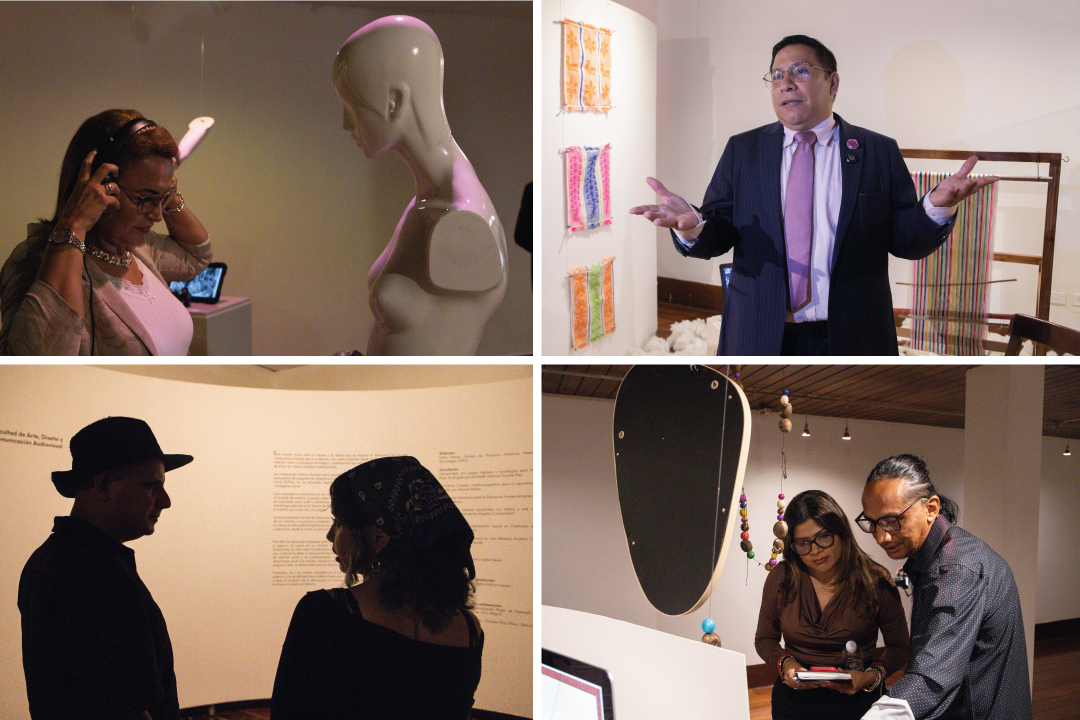
The third theme, the environment, approaches the territory through listening and contemplation. *Exequias Forestales* (Forest Funerals), by Guillermo Doylet, Gabriel Briones, Andrea Rubio and Andy Rodríguez, presents a ritual of mourning in response to the loss of the forests. Meanwhile, *Pisadas en el Tiempo: Cartografías Acústicas Colectivas del Bosque de la Prosperina* (Footsteps in Time: Collective Acoustic Maps of the Prosperina Forest), by Remigio Vásconez, Christian Proaño and José Luis Melendres, transforms visitors’ footsteps into a sound experience linked to the forest’s acoustic landscape.
Interaction is one of the exhibition’s key components. The works invite visitors to walk, sit, listen and participate, fostering an active relationship between the visitor and the exhibition space. Thus, the experience is not limited to simply observing the works: it is transformed by the presence and actions of those exploring the exhibition.
To round off the tour, visitors can write a reflection, question or impression on a Post-it note and add it to a collective wall. In this way, individual experiences become part of a shared memory.
“Memory and Territory in a Latent State” will be open to the public from 11 to 22 August 2026, from 09:00 to 17:00, in Gallery 5 on the second floor of the Nahím Isaías Museum, located at Clemente Ballén and Pichincha, in Guayaquil. The exhibition aims to create a space where art, research and the community come together, where memory can be brought to life, the territory can take on new voices, and visitors cease to be mere spectators to become part of the experience themselves.
© Photography: Romina Gómez / Text: José Luis Castro