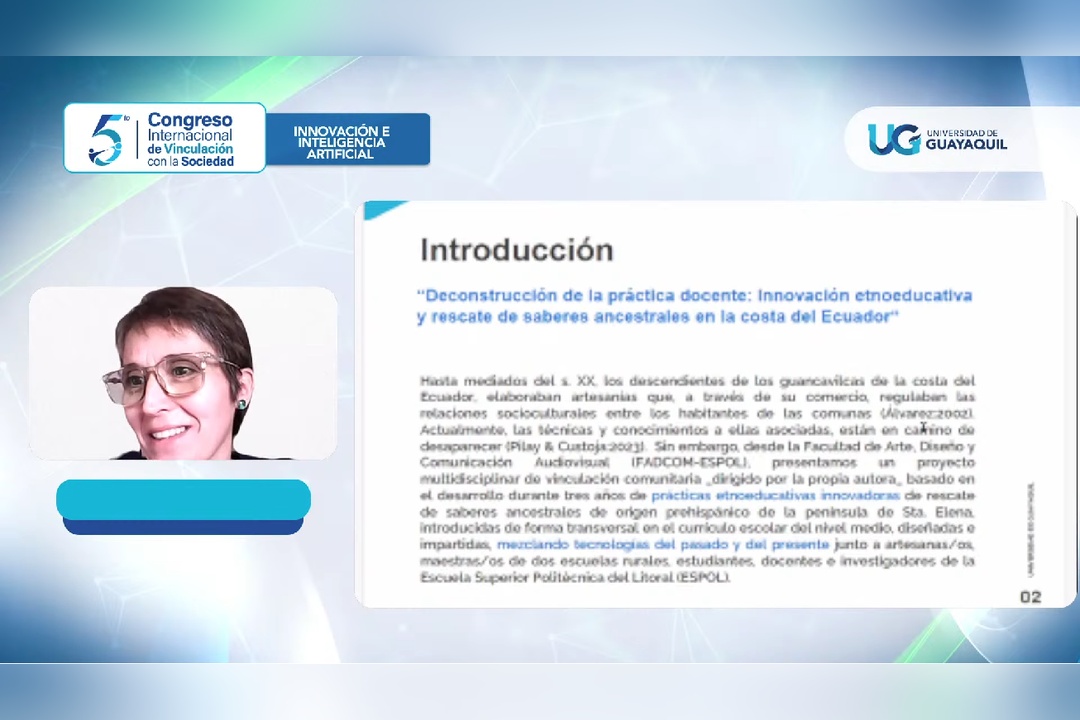


María de los Ángeles Custoja Ripoll, a professor at ESPOL’s School of Art, Design, and Audiovisual Communication (FADCOM), presented the keynote address “Deconstruction of Teaching Practice: Ethno-educational Innovation and the Revival of Ancestral Knowledge on the Ecuadorian Coast” during the 5th Congress on Community Engagement, dedicated to innovation and artificial intelligence.
In her presentation, she shared the progress of a multidisciplinary project being carried out in the communities of Pechiche and Manantial de Chanduy, south of the Santa Elena Peninsula. The initiative seeks to incorporate the ancestral knowledge of the descendants of the Huancavilca culture into secondary education through ethno-educational practices and innovative teaching resources.
The project prioritizes three artisanal traditions of pre-Hispanic origin that are at risk of disappearing: metalworking, for which the last artisan in the area has passed away; weaving, which currently has very few practitioners; and pottery, which is kept alive mainly through the work of three sisters.
Based on a participatory assessment, the team found that this knowledge is rarely incorporated into the communities’ educational programs and that its transmission across generations has weakened. In light of this reality, the proposal aims to integrate these traditions across various subjects, linking them to mathematics, natural sciences, and social sciences from a cultural perspective.
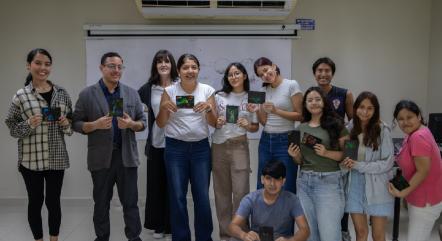
The methodology combines participatory action research, cooperative learning, and educational workshops. Students and faculty from nine ESPOL degree programs are involved in its development: Graphic Design, Product Design, Media Production, Biology, Chemistry, Mathematics, Computer Science, Electronics, and Telematics.
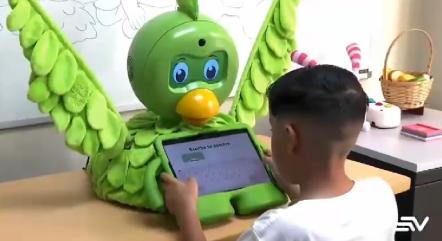
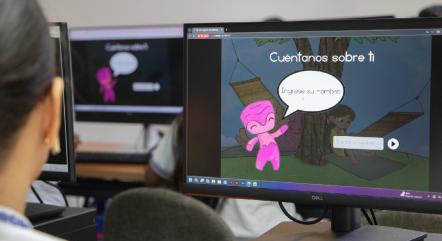
As part of the outcomes, educational resources are developed, including mobile apps, short films, games, and educational kits with activities and materials for use in schools. These products integrate modern technologies with traditional practices, such as weaving on a vertical loom, and aim to ensure that the knowledge shared in the classroom also reaches students’ homes.
The initiative proposes a teaching approach that links innovation, technology, and cultural identity, with the goal of strengthening the transmission of ancestral knowledge and providing communities with tools to preserve their cultural heritage.
Learn more about this initiative: Watch the lecture on YouTube
© Text: José Luis Castro