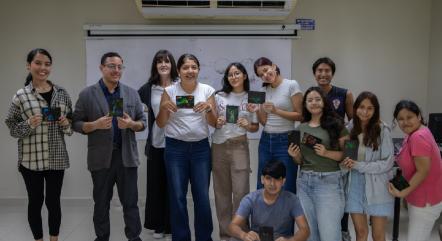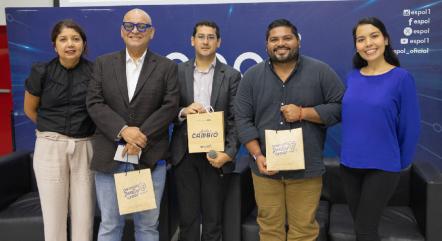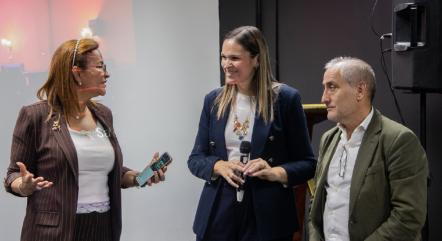


About 40 students from the Ciudad de Azogues Educational Unit, located in southern Guayaquil, visited ESPOL’s School of Art, Design, and Audiovisual Communication (FADCOM) on Friday, November 6, 2026, to learn about and try out a digital app inspired by the traditional weaving techniques on vertical looms from the Santa Elena Peninsula. The activity took place as part of FADCOM’s Social and Educational Growth Program, within the framework of the community project “Development of Ancestral Knowledge through Community Design and Art” (Phase IV), led by Professor María de los Ángeles Custoja Ripoll.
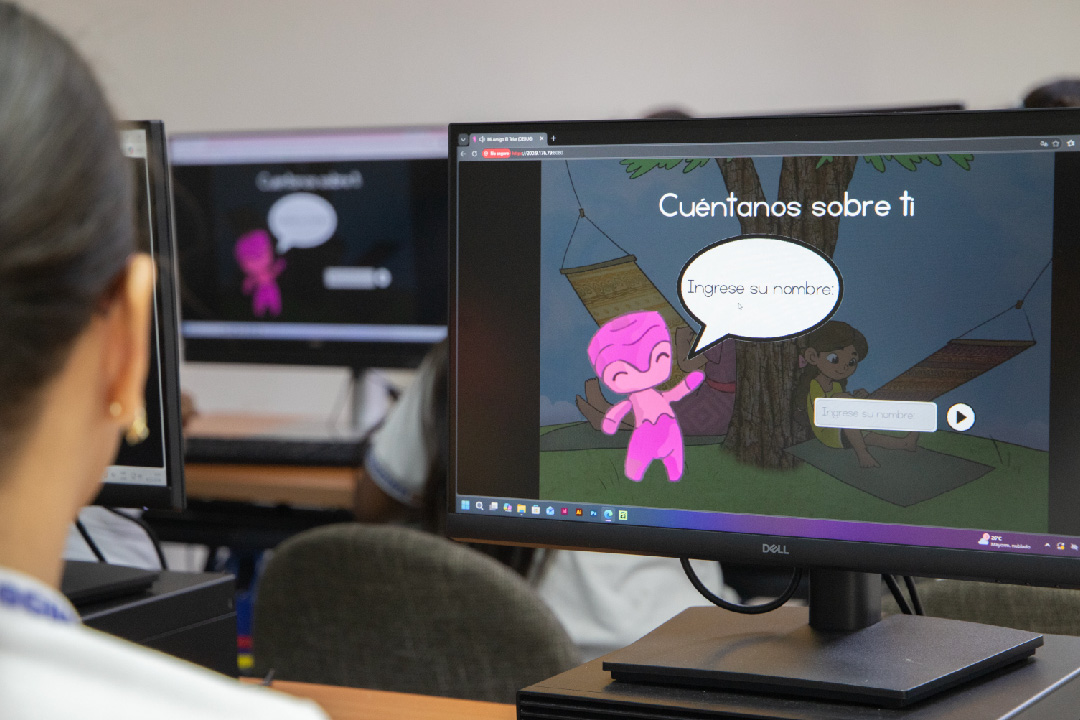
During the visit, the children learned about and tried out a mobile app that offers an interactive experience to introduce them to vertical loom weaving—an ancestral practice of pre-Hispanic origin found on the Santa Elena Peninsula and in other areas of the Ecuadorian coast, whose knowledge is at risk of disappearing. The app features a story in which a grandmother teaches her granddaughter to weave and incorporates concepts, vocabulary, and activities that allow students to digitally explore this technique. In this way, participants can learn the basics of weaving and experiment with an activity inspired by this traditional practice.
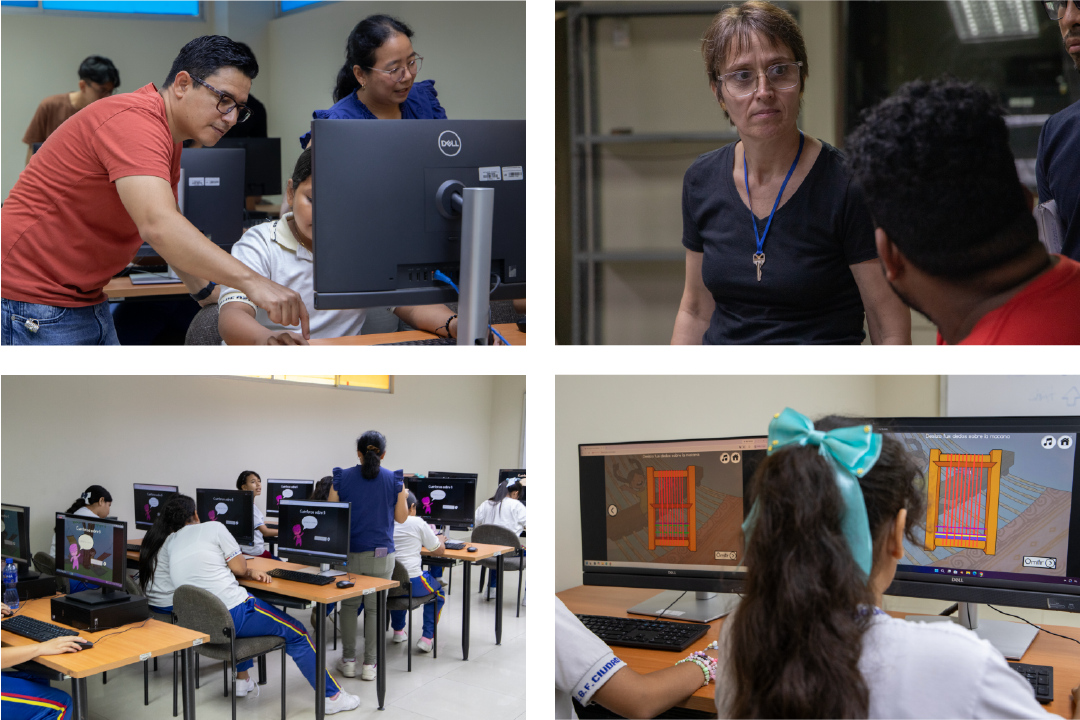
This tool was developed in collaboration with FIEC mentors David Jurado and Irene Cheung. The initiative combines design, technology, and education to introduce younger generations to ancestral knowledge and contribute to its preservation through digital resources.
© Photography and Text: José Luis Castro