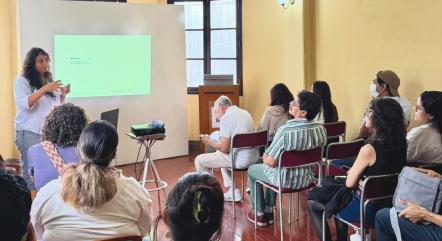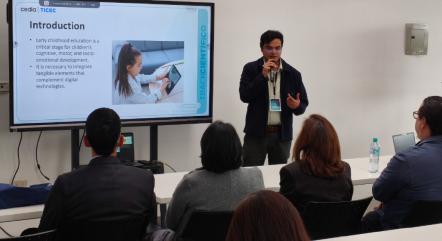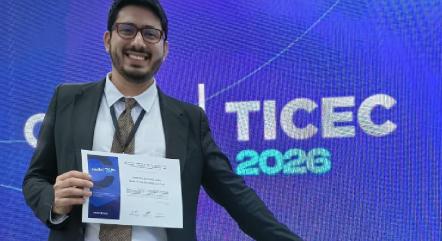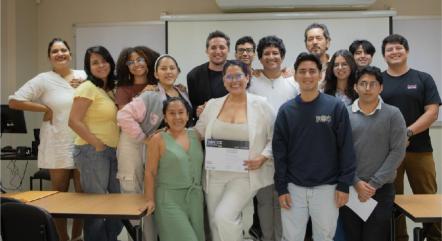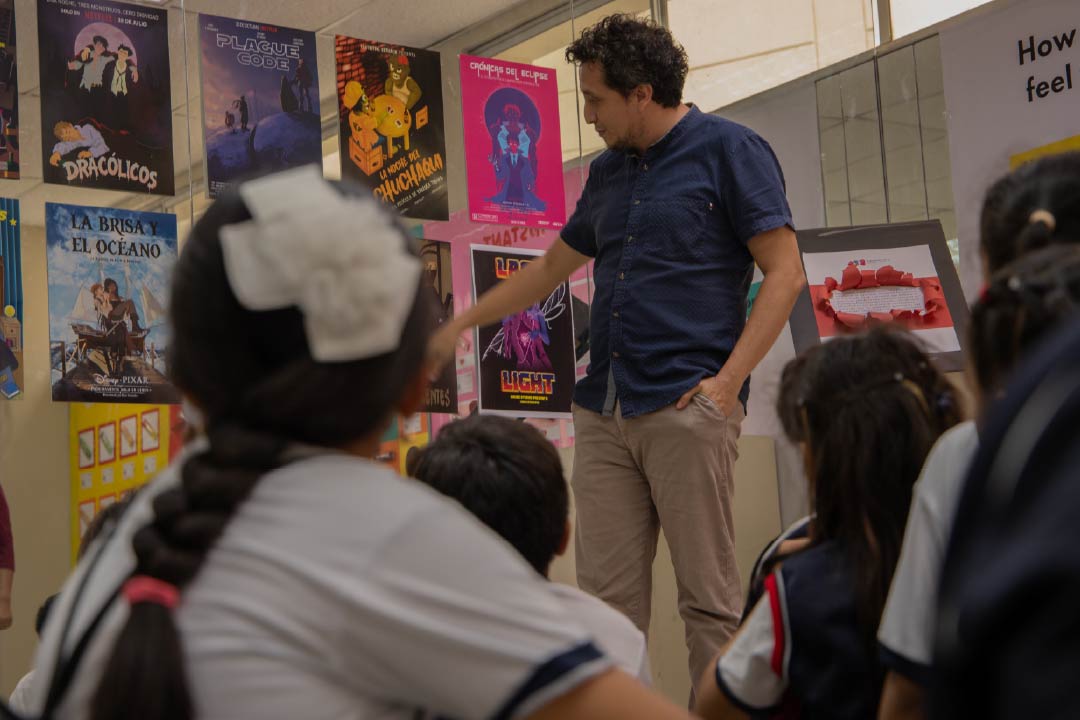


The Faculty of Art, Design, and Audiovisual Communication (FADCOM), the Faculty of Electrical and Computer Engineering (FIEC), and the Faculty of Life Sciences (FCV) at ESPOL developed a training and experimentation program focused on the design and development of video games with an environmental focus, in which 20 students from the 4th, 5th, and 6th grades of Basic General Education at the Hermano Francisco Gárate School.
The program took place from June 14 to August 11, 2026, through nine theoretical and practical workshops in which students explored different stages of video game creation. The experience included content on the fundamentals of video games, the creation of a Game Design Document (GDD), character design, defining game mechanics, level design, incorporating an environmental focus, and selecting sound and multimedia resources.
In the environmental component, the FCV’s participation allowed for the incorporation of knowledge and content related to environmental stewardship and biodiversity into the creative process, enriching the projects developed by the students from an interdisciplinary perspective.
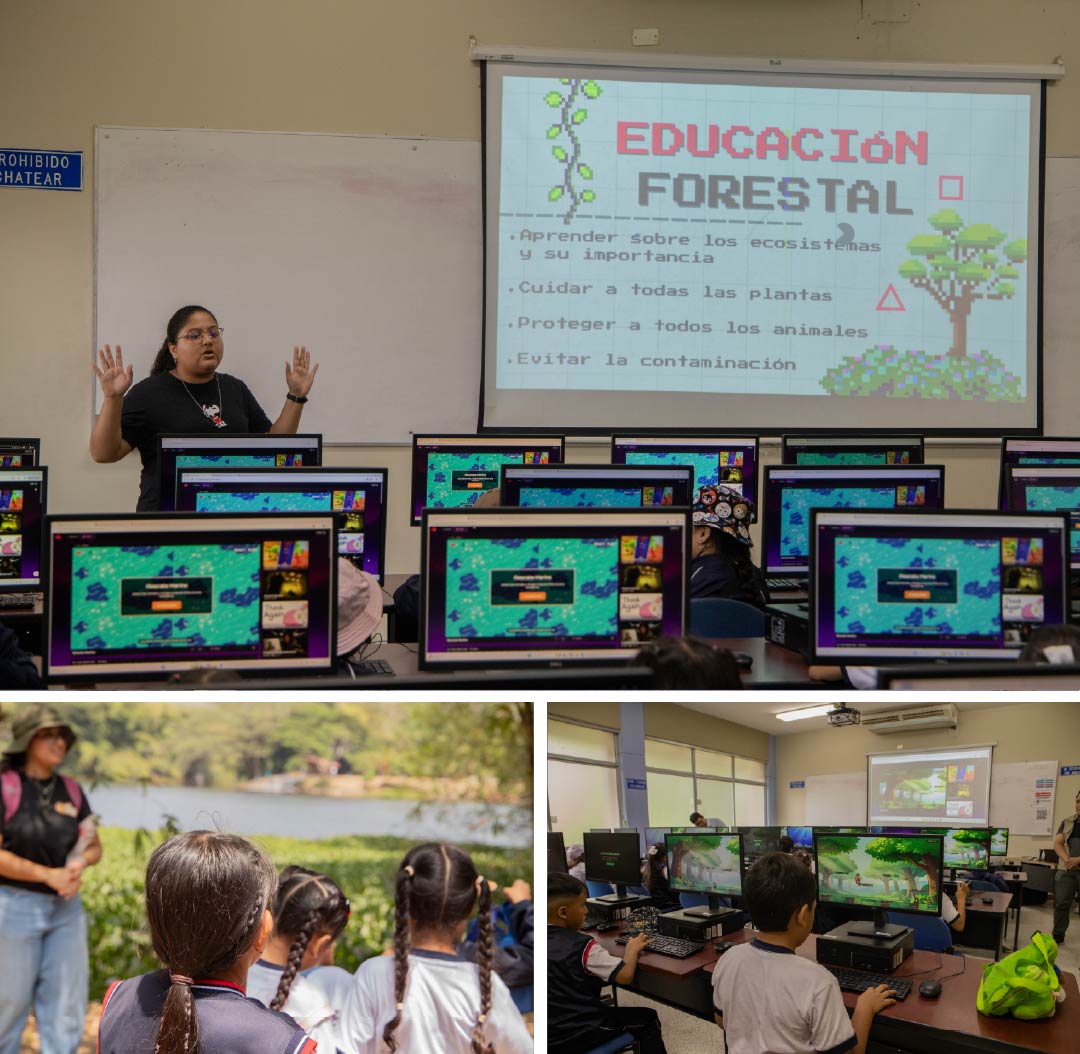
As part of the process, participants also held a hackathon to create video games using artificial intelligence, exploring these tools as a means to support creative and development processes. Subsequently, they conducted playtesting and evaluation sessions, which allowed them to test the video games they had developed and identify opportunities for improvement.
The process culminated in a special event on August 14, 2026, when FADCOM, FIEC, and FCV welcomed 50 children, who participated in activities related to educational video games and environmental education. During this event, the participants became the first players to test three video games developed during the School, creating a space for interaction and feedback between creators and users.
The experience allowed the students to transition from being video game users to creators of digital experiences, incorporating content related to environmental stewardship into their projects. Additionally, the process opens up an opportunity to validate a methodology for designing and developing video games with children, incorporating artificial intelligence as a tool to support the creative and development process.
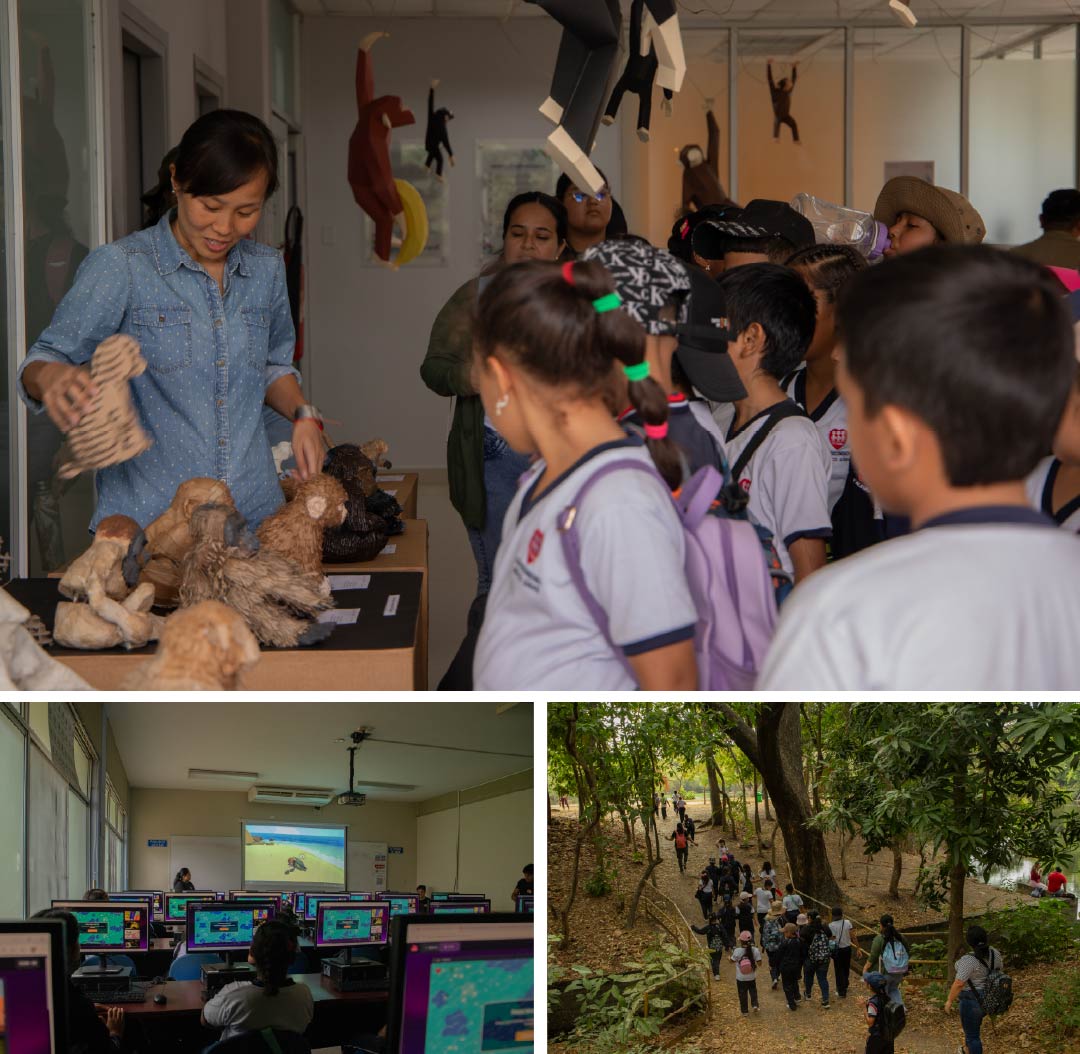
The initiative highlights the potential of interdisciplinary collaboration between art, design, technology, engineering, and the life sciences, integrating knowledge and methodologies to create new learning experiences through video games and environmental education.
Through these types of experiences, FADCOM, FIEC, and FCV help ensure that children and young people are not merely consumers of technology, but also designers, creators, and protagonists of their own digital solutions, as they explore new ways of learning and engaging with environmental challenges.
© Photography: Raul Ruiz / Text: José Luis Castro