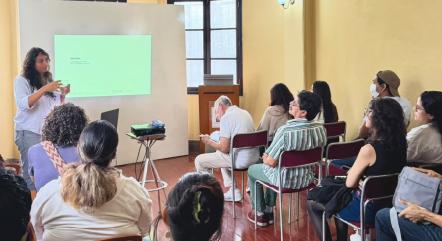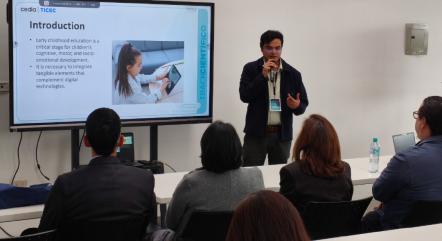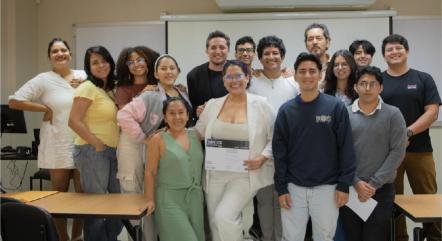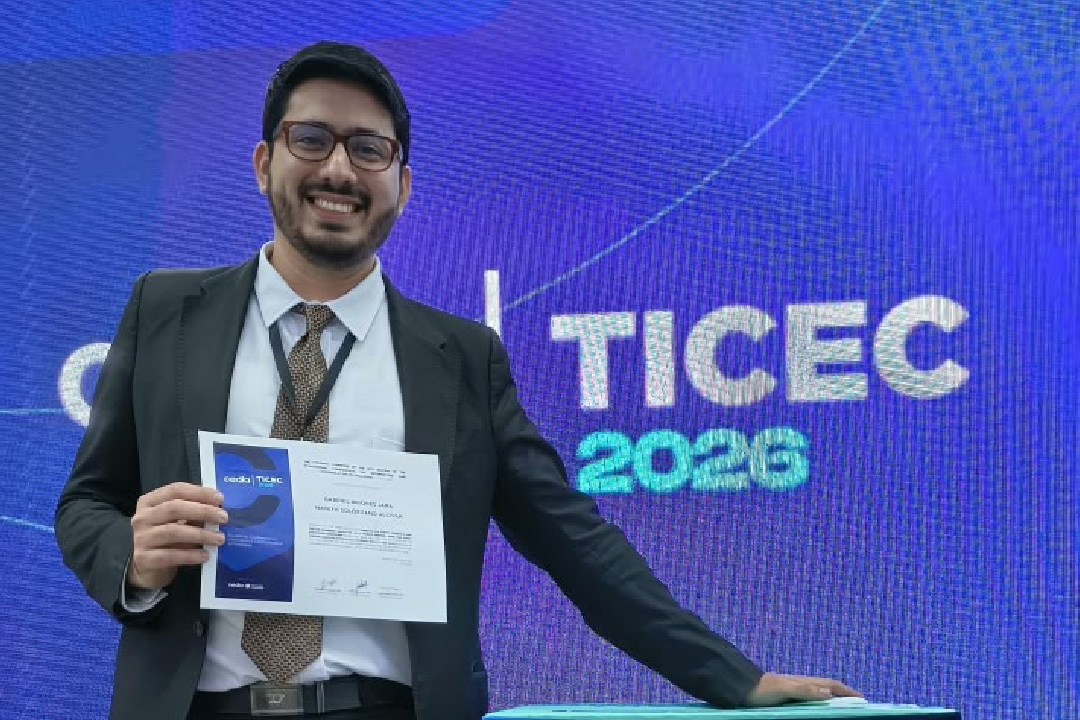


Gabriel Briones Jara, M.Sc., an alumnus of the Master’s programme in Art and Technology at ESPOL’s Faculty of Art, Design and Audiovisual Communication (FADCOM), won the Best Paper Award in the ‘Human-Computer Interfaces, Extended Reality, and EdTech’ session at the 14th Ecuadorian Conference on Information and Communication Technologies (TICEC 2026). The paper was co-authored with Nayeth Solórzano Alcívar, Ph.D.
The research analyses the use of haptic feedback, via vibrations, in educational video games for mobile devices aimed at children aged between 4 and 5. The study compared two versions of a prototype: one incorporating vibration and the other using conventional touch controls. The evaluation involved 25 children and considered aspects such as attention, emotional response, interaction, frustration and perceived complexity. Metrics such as completion time, error rate and touch interaction coordinates were also analysed.
The results showed a more positive emotional response to the version incorporating vibration, whilst attention levels remained high in both conditions. No statistically significant differences were found in operational performance, nor was there any increase in frustration or perceived complexity. Furthermore, the analysis of tactile interactions provided additional insight into the participants’ behaviour during the game.
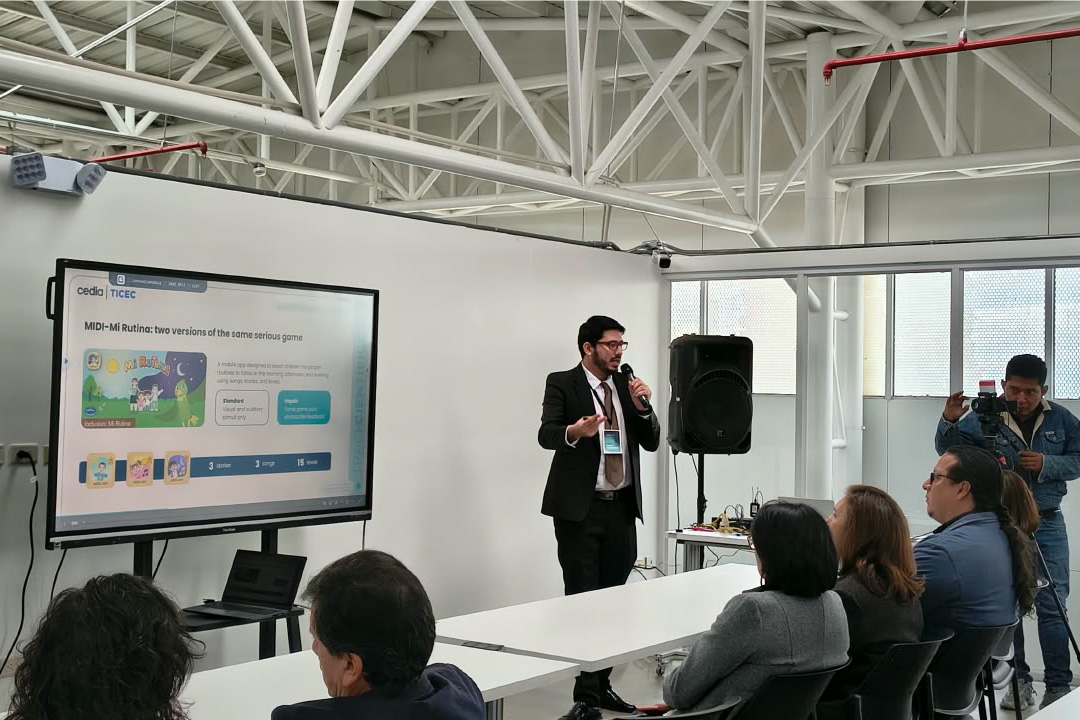
The study highlights the potential of integrating haptic stimuli and analysing user interactions to design and evaluate digital educational experiences aimed at early childhood. The research suggests that the incorporation of haptic stimuli and the analysis of tactile interactions can contribute to the development of more engaging digital educational experiences and provide new evidence for assessing how children interact with such tools.
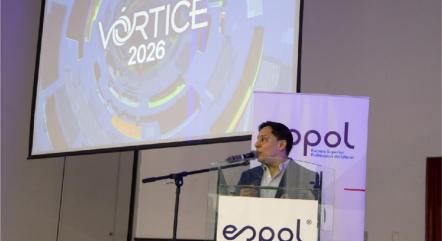
The award was presented during TICEC 2026, held on 15 and 16 October, an event that brings together researchers and professionals to share advances in information and communication technologies. This achievement highlights the contribution of research carried out by FADCOM–ESPOL alumni to the exploration of new possibilities at the intersection of technology, human–computer interaction and education.
© Photography: Courtesy / Text: José Luis Castro