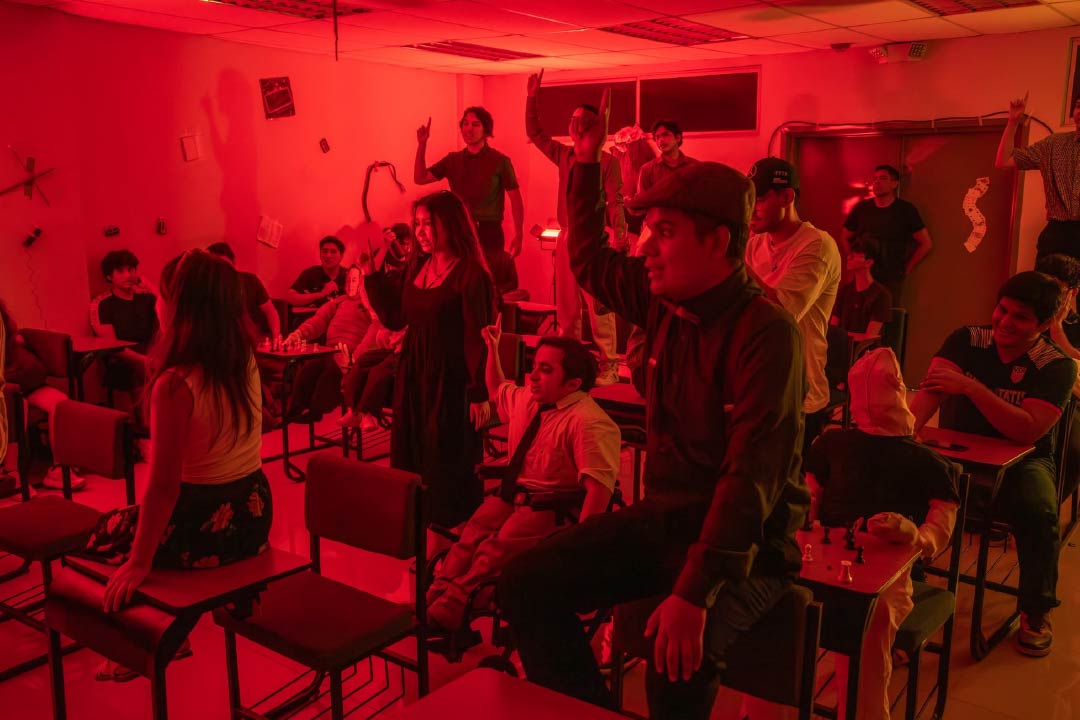


The Faculty of Art, Design, and Audiovisual Communication (FADCOM) presented “La clase muerta,” a theatrical and performative exercise inspired by the work of Polish playwright and director Tadeusz Kantor, developed by students in the Acting course under the direction of instructor Rafael Santi.
The project emerged as a process of collective exploration in which students worked with excerpts from the original play to create their own interpretation. The exercise allowed them to explore themes such as childhood memories, education, authority, and the way in which school experiences help shape our identity.
Throughout the process, the students actively participated in the creation of the performance. Drawing on the excerpts that most interested them, they collaboratively developed scenes and actions, integrating physical work, stage expression, and their own personal experiences.
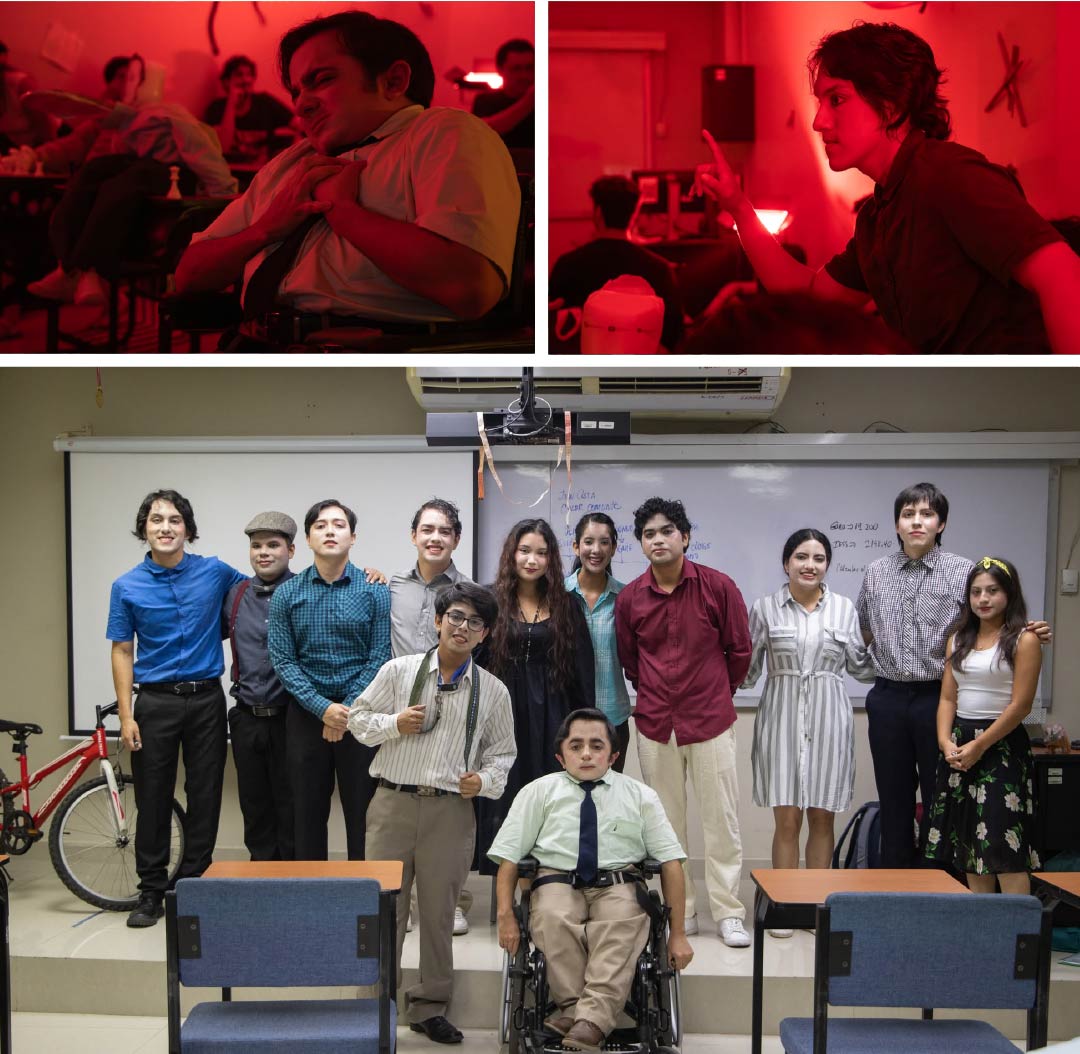
Beyond the staging, the exercise provided an opportunity for participants to strengthen their ability to express themselves, communicate, and work as a team. For some students, the process also meant confronting their fear of speaking in front of others and discovering new ways to communicate through the language of theater.
“The Dead Class” thus offers a critical—yet playful—perspective on education and the memories that remain of it. The experience invites reflection on what we learn, what we leave behind, and how those experiences continue to shape us in the present.
The performance took place on Thursday, August 13, 2026, in Room A002 of the FADCOM building, with two 15-minute performances: at 9:30 a.m. and 10:30 a.m.
The presentation allowed students to bring to the stage the result of an academic process based on research, experimentation, and collective creation, demonstrating how performance can become a tool for exploring memory, questioning everyday experiences, and generating new forms of expression.
© Photography and Text: José Luis Castro