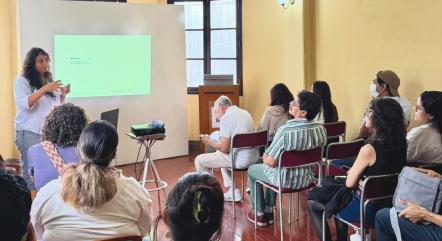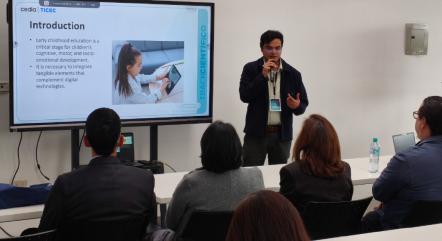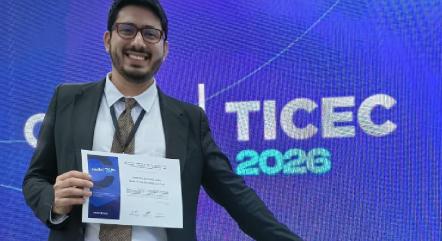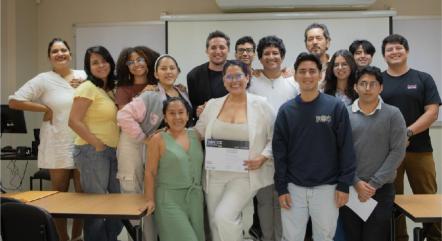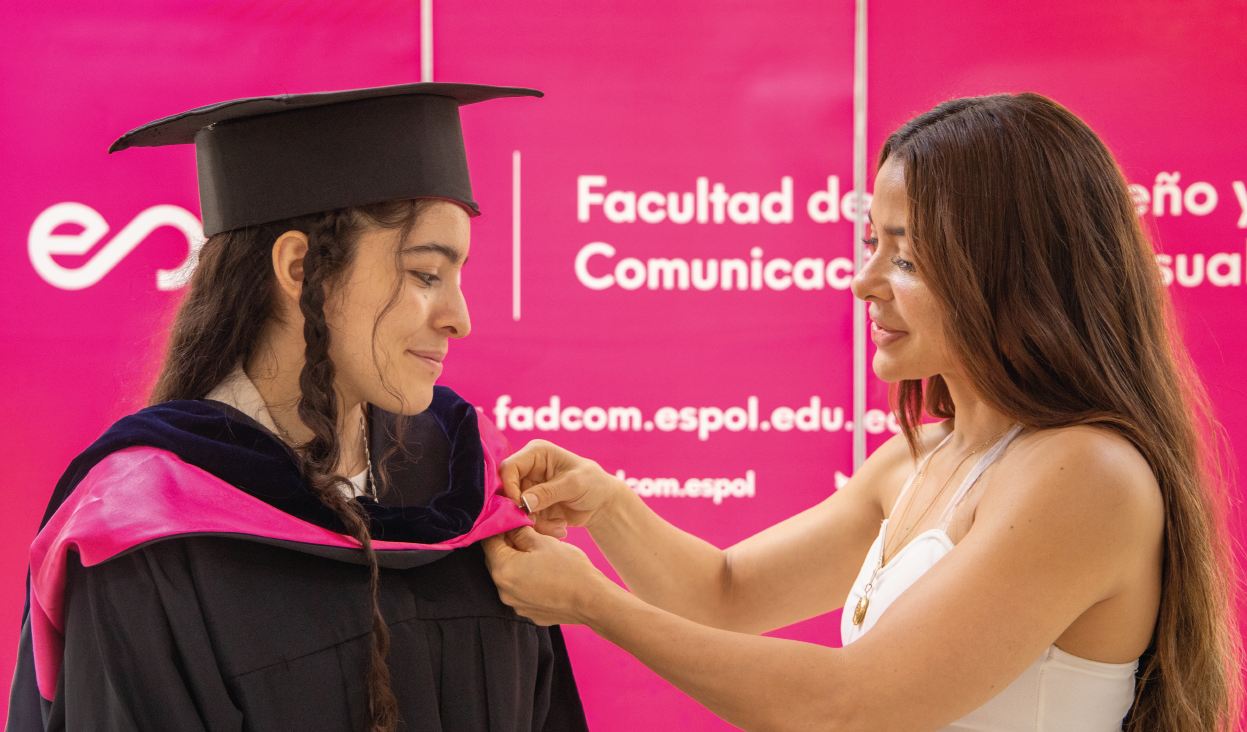



This Friday, January 30, 2026, the final projects for the Master's Degree in Digital Audiovisual Post-Production, Cohort V, an academic program of the Faculty of Art, Design, and Audiovisual Communication (FADCOM) at ESPOL, were defended. Seven master's students participated in the event, presenting six graduation projects that integrate research, audiovisual creation, and technological exploration.
The projects were presented in a hybrid research-creation format, demonstrating mastery of post-production tools, sound design, motion graphics, animation, virtual reality, and artificial intelligence. Each proposal was evaluated by a graduation committee made up of professors Juan Sebastián Mosquera, Daniel Castelo, and Víctor Manuel Cantos, who analyzed both the conceptual basis and technical execution of the works.
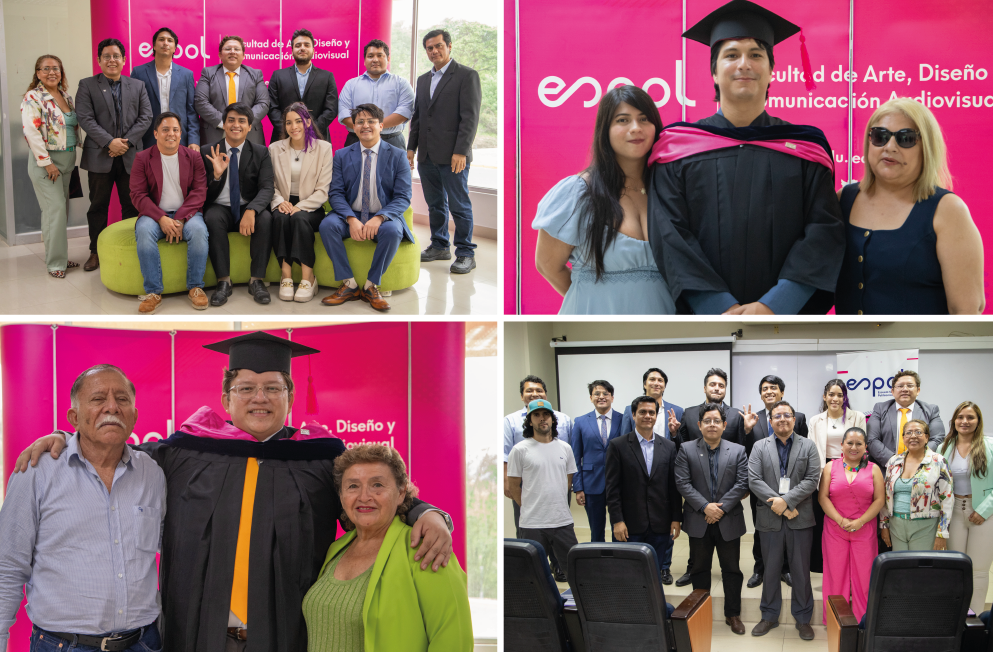
Among the works presented were topics such as the reinterpretation of myths in art through audiovisual essays, with the project Mitoscopía by Aarón Israel Conrado Saltos; raising awareness of present paternity through artificial intelligence-assisted animation, led by Jefferson Stalyn Mero Aguilar; criticism of extreme productivity in artistic creation from a surrealist horror perspective, with Una dosis de Pasión (A Dose of Passion) by Kalley Melanie Peñafiel Betancourt; analysis of emotional crises through audiovisual narrative, presented in Fe, Esperanza y Amor (Faith, Hope, and Love) by Reybi David Quijije Véliz; environmental education through immersive experiences in 360° video, developed in Islote El Pelado en Realidad Virtual by Cristhian Geovanny Morán Burgos and Jonathan Steven Castillo Torres; and reflection on identity, authorship, and digital automation in contemporary cinema, addressed in Usuario Cero by Iván Isaac Zumárraga Unda.
The presentations highlighted the program's focus on training professionals capable of articulating critical thinking, artistic sensitivity, and technological mastery. The projects presented address cultural, social, and environmental issues through contemporary audiovisual language, positioning post-production not only as a technical stage, but also as a space for reflection, experimentation, and meaning-making.
With these presentations, the Master's Degree in Digital Audiovisual Post-Production reaffirms its commitment to high-level academic training, oriented towards applied research and the creation of audiovisual content with conceptual impact and social relevance.
© Photography & Written: José Luis Castro