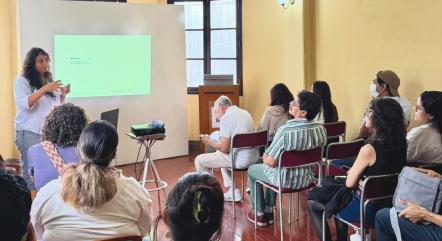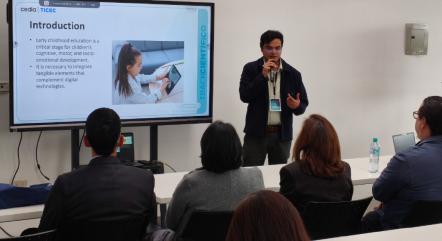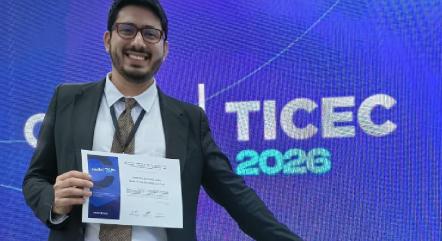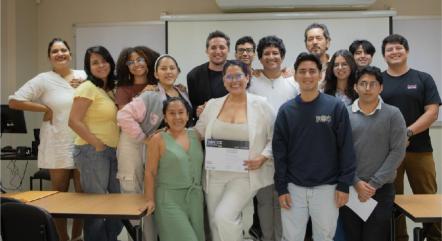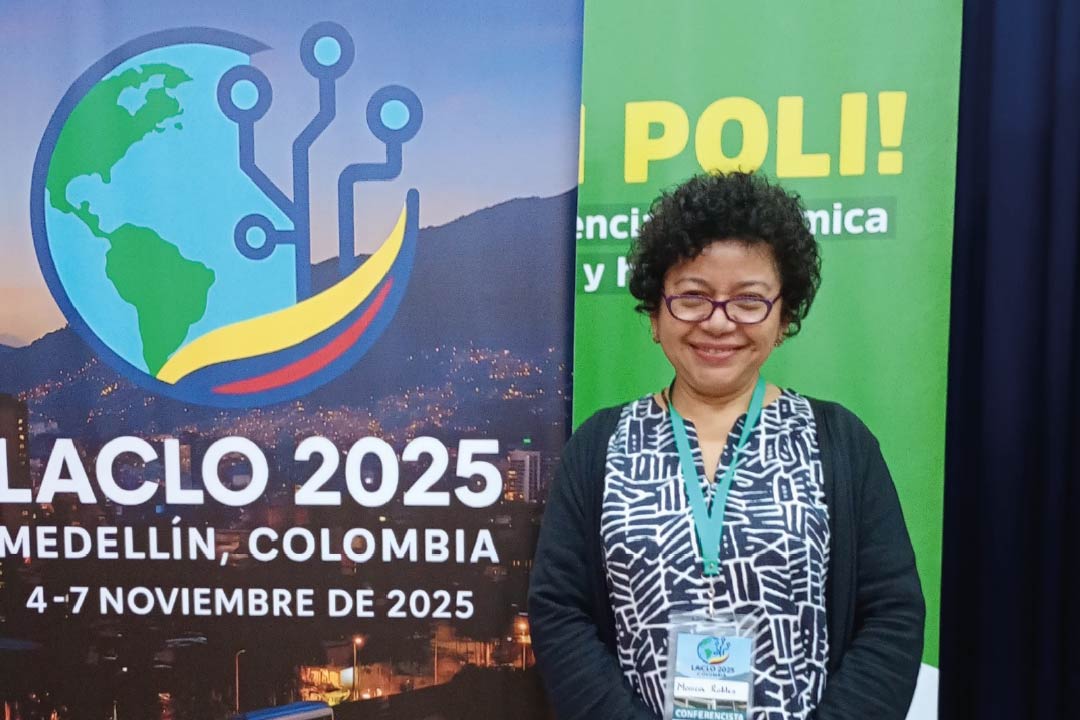


Professor Mónica Robles, M.Sc., represented FADCOM – ESPOL at the 20th Latin American Conference on Learning Technologies (LACLO 2025), one of the most relevant academic forums in the region in the field of educational technology. The event took place from November 3 to 7 in Medellín, Colombia, hosted by the Politécnico Jaime Isaza Cadavid, Tecnológico de Antioquia, and the National University of Colombia.
During the conference, Robles presented the full paper entitled “‘Popular graphics’ as a pedagogical resource: Feasibility and contributions in educational settings in Guayaquil”, a study indexed in Scopus and developed in collaboration with Georgina Manzano and Nayeth Solórzano.
The study analyzes how popular graphics—a vernacular visual expression at risk of disappearing due to urban homogenization and the advance of digital technologies—can become an inclusive and context-based educational resource within public schools in vulnerable sectors.
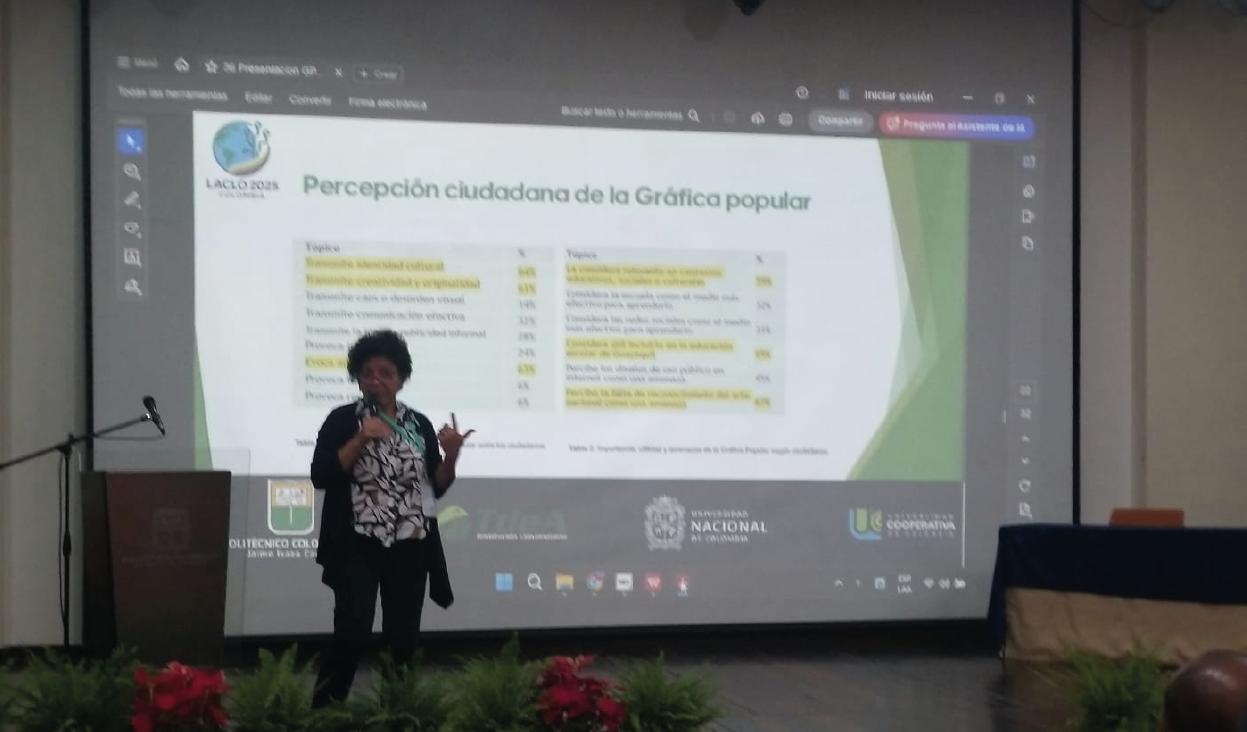
The research proposes integrating this graphic heritage as a pedagogical tool through a mixed-methods approach involving secondary school teachers, design students, and traditional sign painters. The results show a positive assessment of popular graphics as a vehicle for cultural identity, critical thinking, and situated learning, while also highlighting the need to mediate between traditional knowledge and digital platforms to revitalize this practice.
During her participation in LACLO, Robles also attended academic sessions focused on educational innovation and inclusion, further expanding the formative scope of the experience. The objectives of her participation included strengthening the presence of ESPOL and FADCOM in one of the main Latin American forums on educational technology; establishing cooperation links for future alliances and research in Educational and Inclusive Technology; learning about innovative methodologies such as the Maker Women STEM workshop, aimed at promoting inclusive learning environments for women in science and technology; and disseminating research that rescues cultural heritage at risk and projects it toward new educational practices, thereby expanding its academic and social impact.
Overall, this participation reinforces the commitment of ESPOL and FADCOM to applied research, pedagogical innovation, and the integration of local knowledge into contemporary educational processes, consolidating an educational vision that articulates technology, culture, and community.
© Photography: Courtesy / Written: José Luis Castro