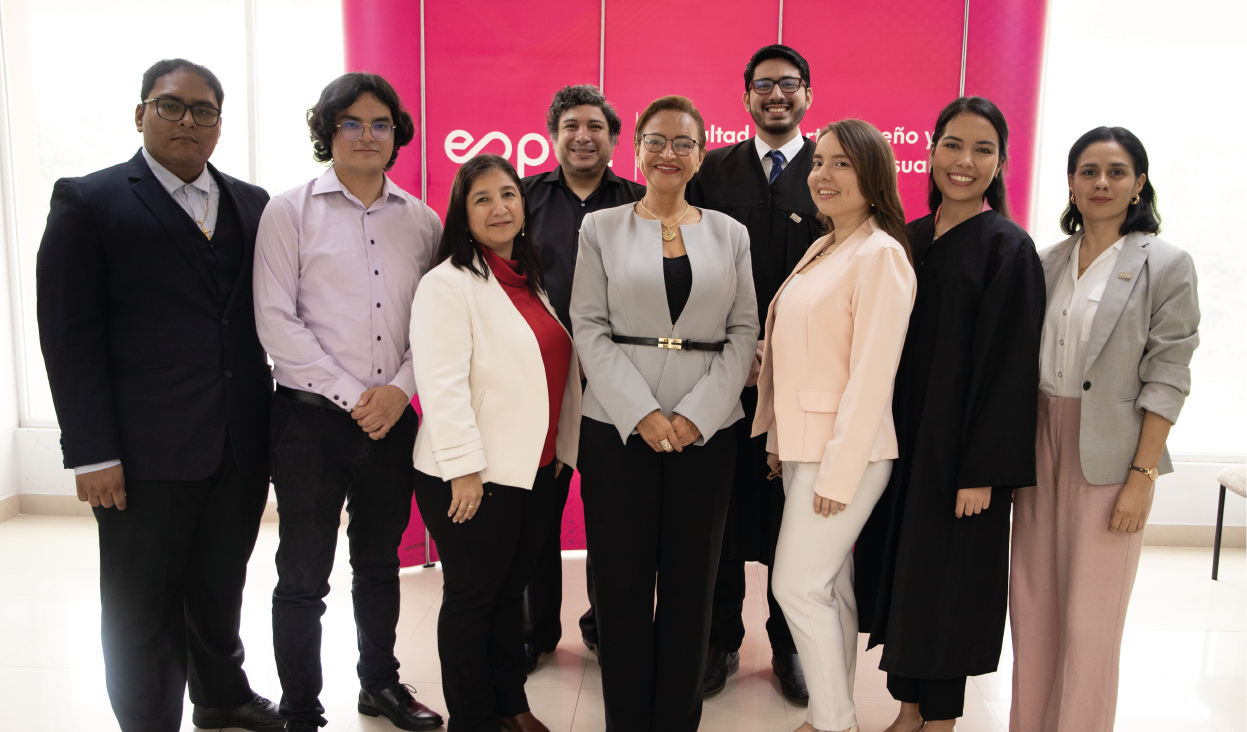



On Friday, February 6, 2026, the Faculty of Art, Design, and Audiovisual Communication (FADCOM) at the Escuela Superior Politécnica del Litoral held the final presentations for the first cohort of the Master's Degree in Art and Technology Research, marking an academic milestone in the consolidation of research at the faculty. During the day, the master's students presented and defended their research projects before academic panels, demonstrating critical reflection, methodological rigor, and a solid articulation between art, technology, and contemporary thought.
The defenses were conducted as a space for academic dialogue, where various research approaches from the field of art and knowledge production were presented. Among the projects presented were research projects that address art from critical, technological, and social perspectives. Georgina Manzano presented Affective Cartography of the Cenepa: An Approach from Video Essay; Adriana Márquez presented From Thread to Code: Digital Transformation of Huancavilca Weaving; and Lissenia Sornoza developed Playing to Heal: Video Games as an Aesthetic Device to Strengthen the Self-Esteem of Girls in Vulnerable Contexts.
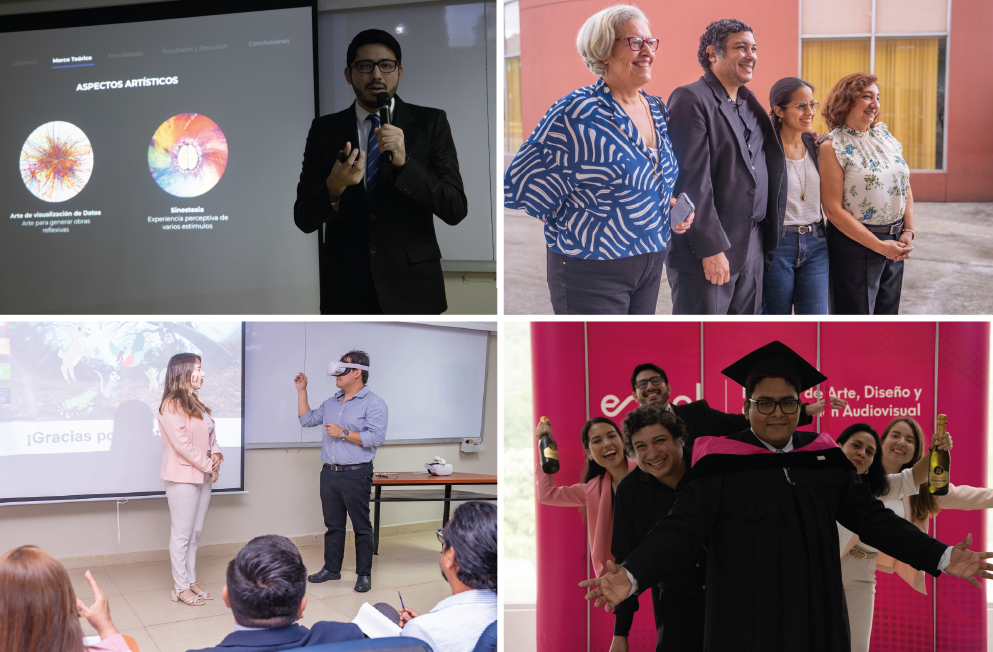
Wilmer Macías presented The Game as a Tool for Disseminating Ancestral Knowledge; Guillermo Doylet presented Vibrations of a Community Memory: A Soundscape Proposal for the Gustavo Galindo Campus; and Gabriel Briones developed Topography of the Invisible: Artistic Mapping of Children's Tactile Interaction in Educational Video Games. The day was rounded off by Andrea Rubio, with the project Immersive model for early childhood education on environmental awareness: Classroom 360 in the Protected Forest, and Michael Arce, who presented Urban memory in simulation: a digital critique of the symbolic loss of Panama Street. During the formal ceremony, FADCOM Dean Nayeth Solórzano, Ph.D., emphasized that this master's degree represents a strategic step for the faculty, paving the way for future doctoral programs and strengthening the academic prospects of its graduates.
He pointed out that the Master's Degree in Art and Technology Research is establishing itself as a key platform for the development of advanced research and the training of researchers with a critical vision and international outlook. For her part, Master Hilda Flor, M.Sc., emphasized that this first cohort marks the beginning of FADCOM's research heritage, bringing together works that not only meet academic requirements but also contribute knowledge through creation, experimentation, and interdisciplinary analysis. In this regard, she highlighted the value of these projects as a basis for future research and as a reference for the academic growth of the faculty.
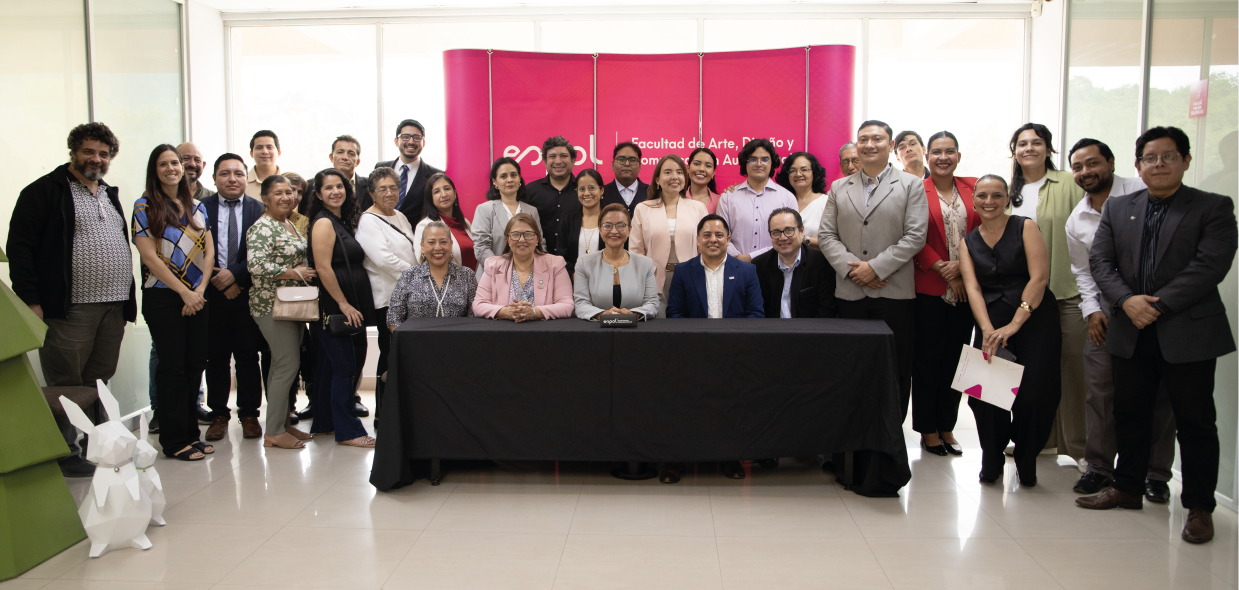
With the addition of the new master's degrees, FADCOM reaffirms its commitment to postgraduate education focused on research, knowledge creation, and the strengthening of academic life, consolidating the Master's Degree in Art and Technology Research as a key program in the intellectual and scientific development of the institution.
© Photography & Written by José Luis Castro