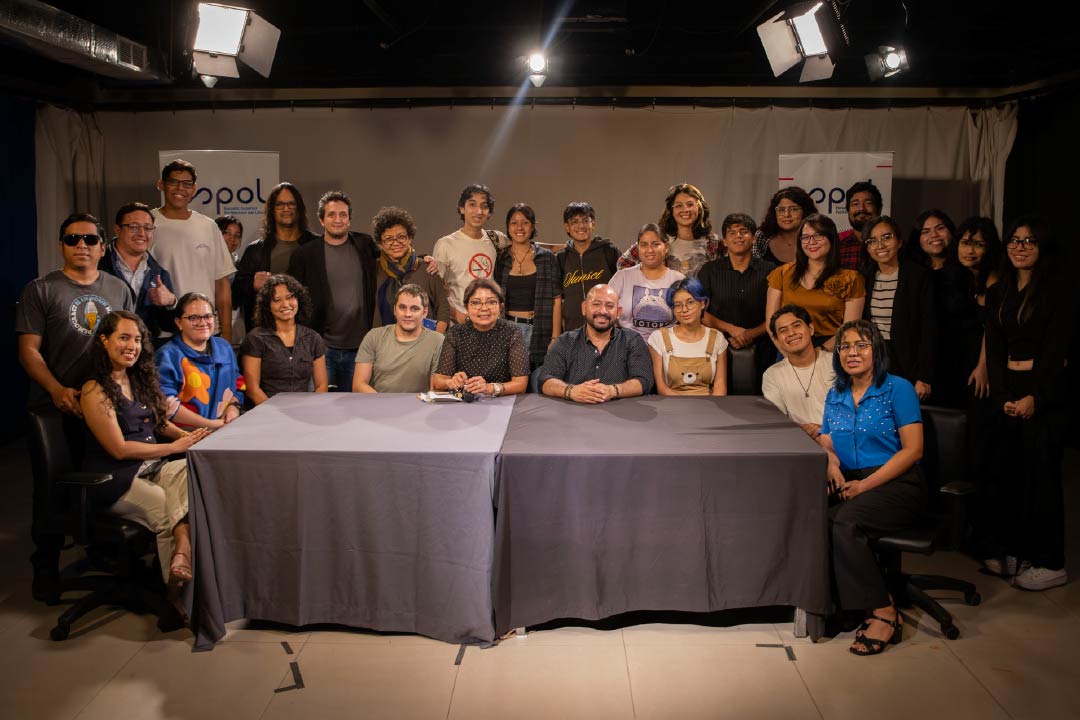


The School of Communication (FADCOM) hosted the first event in the Debate Series, a forum for academic analysis focused on the impact of artificial intelligence on professional training and creative processes within the communication and design industries. The event brought together students, faculty, and alumni for a day of lively debate that highlighted tensions, common ground, and key questions about the present and future of professional practice.
Paola Ulloa served as moderator, guiding the dialogue between opposing viewpoints and concluding the session by emphasizing that AI poses significant challenges for the learning of new generations, and therefore its integration must be approached from a critical, ethical, and balanced perspective. Representing the opposing viewpoint were Jorge Polo, a faculty researcher at FADCOM; Emilia Moncayo, a student in Media Production; Gynmara Pinto, also in Media Production; and Genesis Alvarado Cedeño, an alumna of the program.
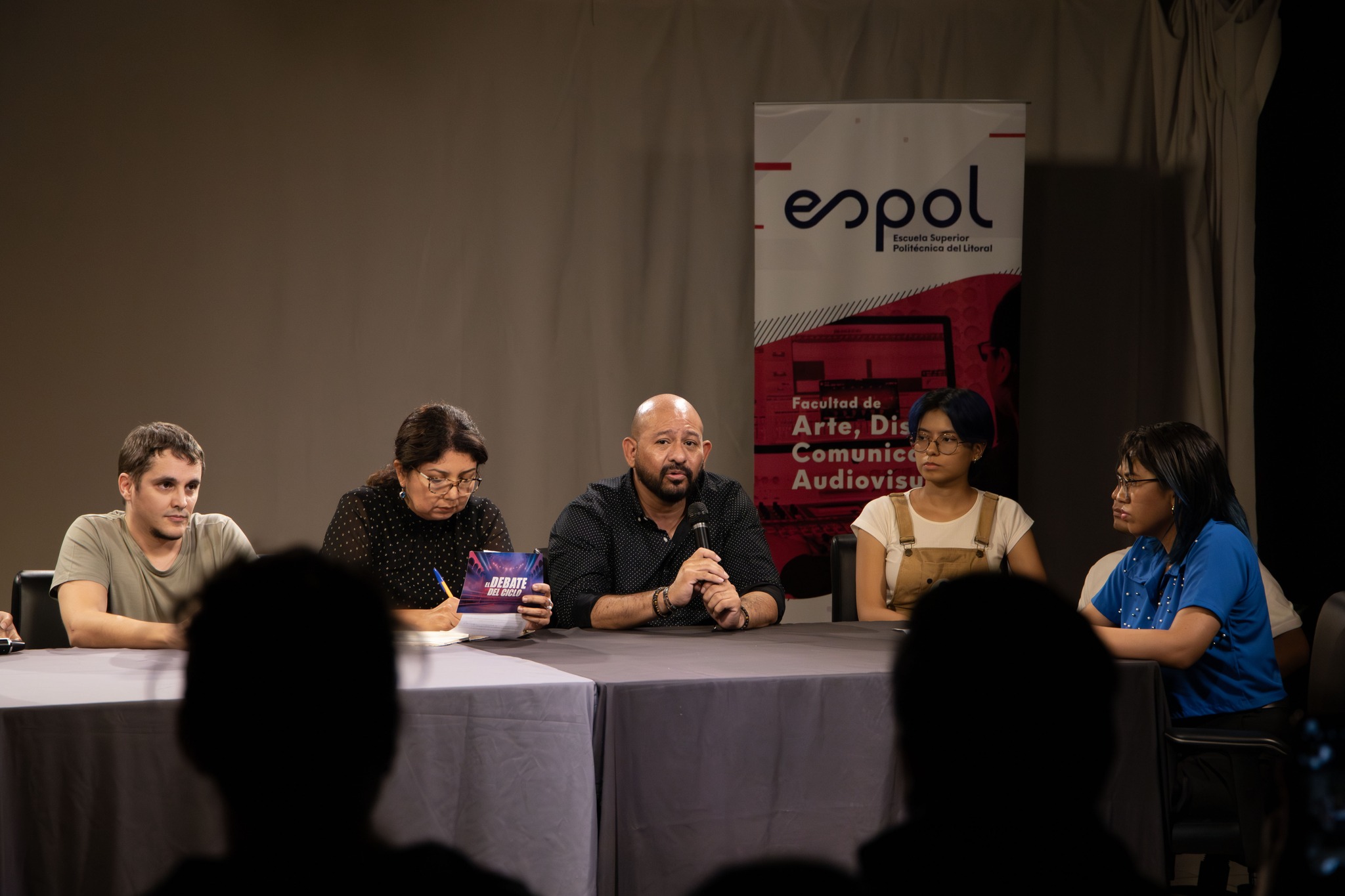
Speaking in favor of the proposal were Edgar Jiménez, M.Sc.; Madelyne Horna, a graphic design student and president of the PHYCOM Club; Richard Tix, a graphic design student; and Nicole Ceballos, also a graphic design student. During the debate, key issues that shaped the discussion were addressed. Those taking a critical stance defended the value of the human creative process over the immediate result, emphasizing that art is not merely the final product but the conscious, ethical, and hands-on journey that gives it meaning.
It was argued that automation can undermine the development of fundamental technical skills during formative stages, foster technological dependence, and dilute authorship. Warnings were also issued about the risk of aesthetic homogenization and the potential loss of creative identity when processes are excessively delegated to automated systems. Along these lines, it was emphasized that without human intent, there is no true artistic expression, and that learning requires error, practice, and reflection—elements that cannot be replaced by algorithms.
From the pro side, by contrast, it was argued that artificial intelligence should be understood as a strategic tool that enhances capabilities, optimizes time, and expands the possibilities for conceptual exploration. It was argued that mastering these technologies is part of the new professional literacy and that the job market demands professionals capable of integrating advanced digital tools with critical thinking. It was emphasized that just as the pencil, the camera, and editing software transformed their respective historical eras, AI represents yet another evolution within the creative ecosystem. Furthermore, it was noted that the true differentiator lies not in the tool itself but in the ability to ask good questions, construct solid prompts, and guide the process with sound judgment.
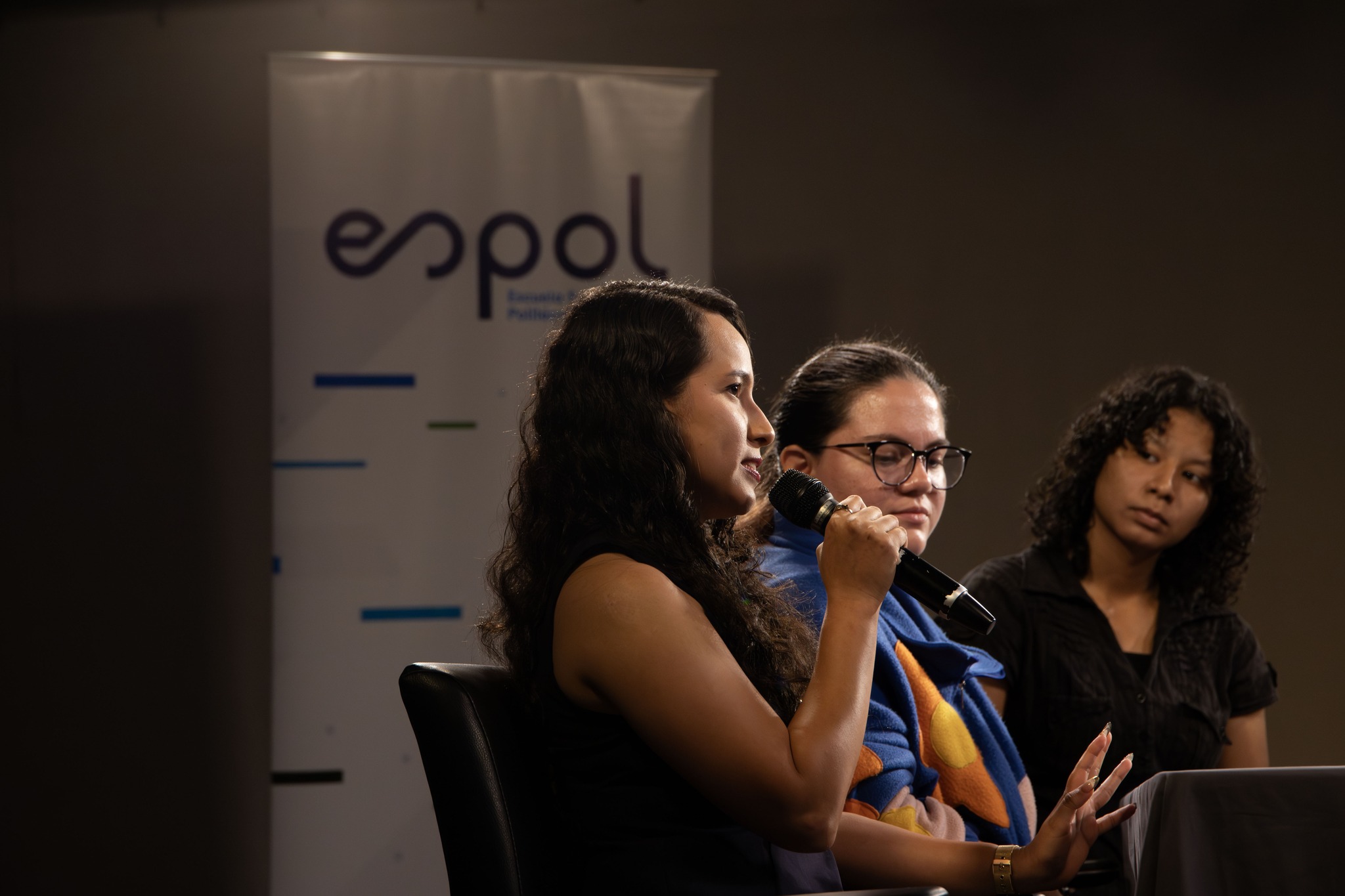
The audience actively participated, raising concerns about ethics, copyright, regulation, the impact on creative employment, and academic responsibility in the face of these technologies. The conversation highlighted areas of agreement: both advocates and critics agreed that AI should not replace human thought, but rather challenge it; that its use requires solid ethical training; and that universities have a duty to support these changes with clear pedagogical guidance.
The first debate in the series concluded that the discussion is not simply about accepting or rejecting artificial intelligence, but rather about defining how to integrate it responsibly into educational processes.
The event marked a starting point for reflecting on the balance between tradition and technology, process and outcome, human creativity and digital innovation, reaffirming FADCOM’s commitment to an education that combines sound judgment, ethics, and strategic adaptation in the face of the challenges of the contemporary professional environment.
© Photography: Christopher Mite, Keyla Yépez / Text: José Luis Castro