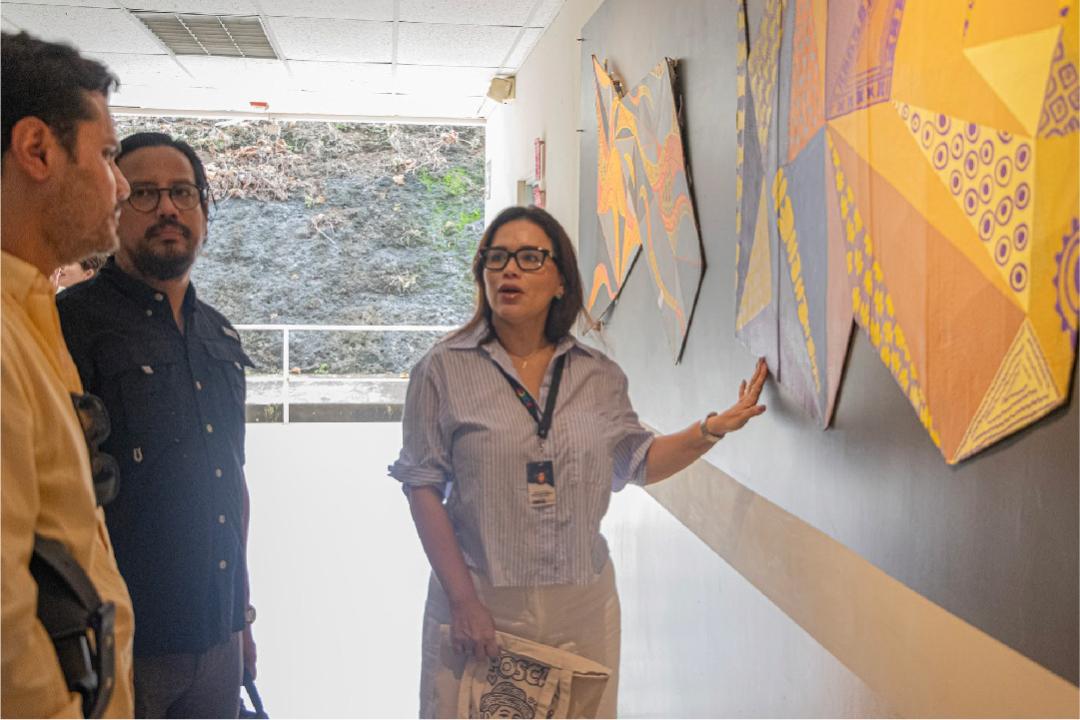


FADCOM–ESPOL students present “Expanding Geometries: Form, Color, and Creative Exploration with POSCA Markers,” a series of works created in the “Painting Techniques” course taught by Professor Billy Soto, which explores the relationships between geometry, chromatic organization, and graphic experimentation. The works were featured in the exhibition *The Constructed Image: Schemes and Representation Between Drawing and Painting*, held at the Guayaquil Municipal Museum.
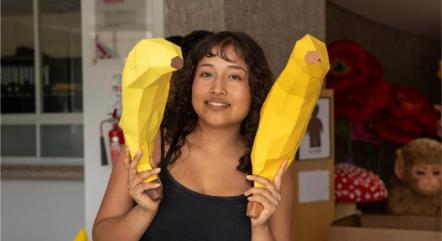
The works are based on an exploration of geometric shapes and modular structures articulated through triangular planes, polygons, and fragmented compositions. In several pieces, the support itself is also part of the work: its irregular contours, recesses, protrusions, and extensions create dynamic silhouettes that project the image into the space and establish a relationship with the wall, the shadows, and the exhibition environment. The composition is built around different visual paths. Some works feature elongated, ascending structures, while others concentrate their elements into compact, faceted, or staggered configurations.
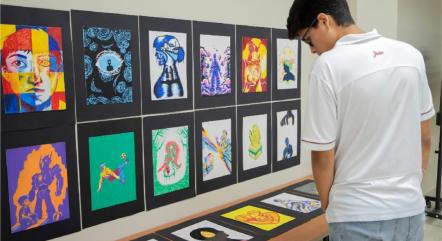
The combination of light and dark planes, diagonals, and fragmentation suggests folds, volume, and movement, while certain shapes evoke recognizable bodies or objects without completely limiting their interpretation. Color plays a structural role within these works. The relationships between blues, violets, and greens, as well as the contrasts between yellows, oranges, reds, and dark surfaces, help differentiate sections, establish hierarchies, and create rhythm. Incorporated into this organization are dots, parallel lines, undulations, spirals, grids, and other patterns that alter the perception of the planes and create varying degrees of visual density.
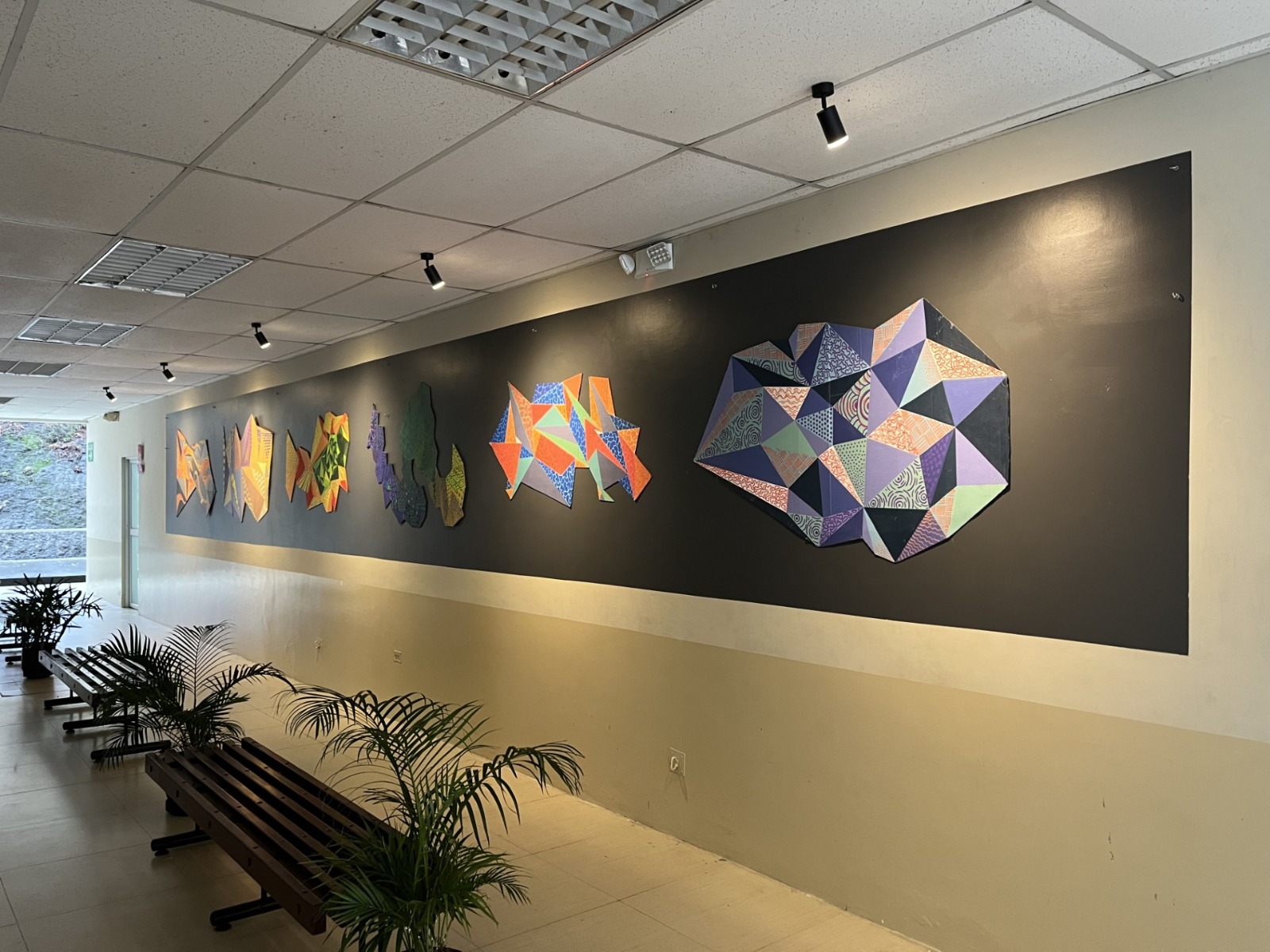
In most of the works, the students incorporated POSCA markers as a tool for directly experimenting with gesture, line, and surface. Using these markers allowed them to develop patterns through the repetition and variation of lines and motifs, making decisions regarding the direction, scale, distance, and contrast of each element. In this way, the tool became integrated into the creative process as a means of expanding the expressive possibilities of manual work. From a pedagogical perspective, the project allowed students to approach visual creation as an exercise in visual thinking, in which they had to organize forms, establish chromatic relationships, and explore how graphic interventions transform the interpretation of a composition.
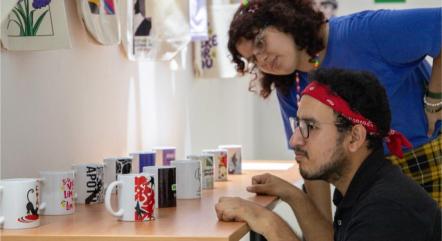
The diversity of approaches evident in the works highlights different responses to shared compositional challenges and reveals the development of unique visual solutions. The presentation of the works at the Guayaquil Municipal Museum made it possible to transfer these explorations from the academic context to the public space and place them in dialogue with an exhibition experience. From a distance, the works stand out for their silhouettes and chromatic contrasts; up close, they reveal the construction of textures, patterns, and variations in the line work.
Currently, “Expanding Geometries” is on view in the Outdoor Gallery, Level 0, of Building 14B at FADCOM, Monday through Friday, from 8:00 a.m. to 4:00 p.m. With “Expanding Geometries,” FADCOM–ESPOL brings together technical learning, material experimentation, and personal expression, demonstrating how the medium, form, color, and drawing tools can be integrated into the creation of new visual languages.
© Photography and Text: José Luis Castro