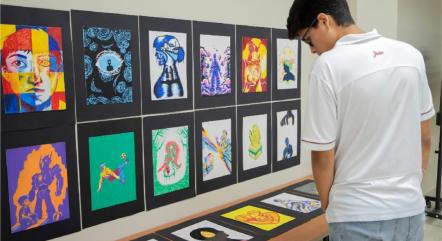



ESPOL’s Faculty of Art, Design, and Audiovisual Communication (FADCOM) held a new edition of Arte Malo ESPOL, a contest that celebrates humor, spontaneity, and creativity from a different perspective, symbolically awarding prizes to the “worst” artistic works from the polytechnic community.
The awards ceremony took place on July 23 and brought together students and faculty in an entertaining atmosphere where art and fun took center stage. During the event, the contest’s most memorable works were recognized, and musical performances were presented that had the audience laughing with their deliberately off-key yet charismatic renditions.
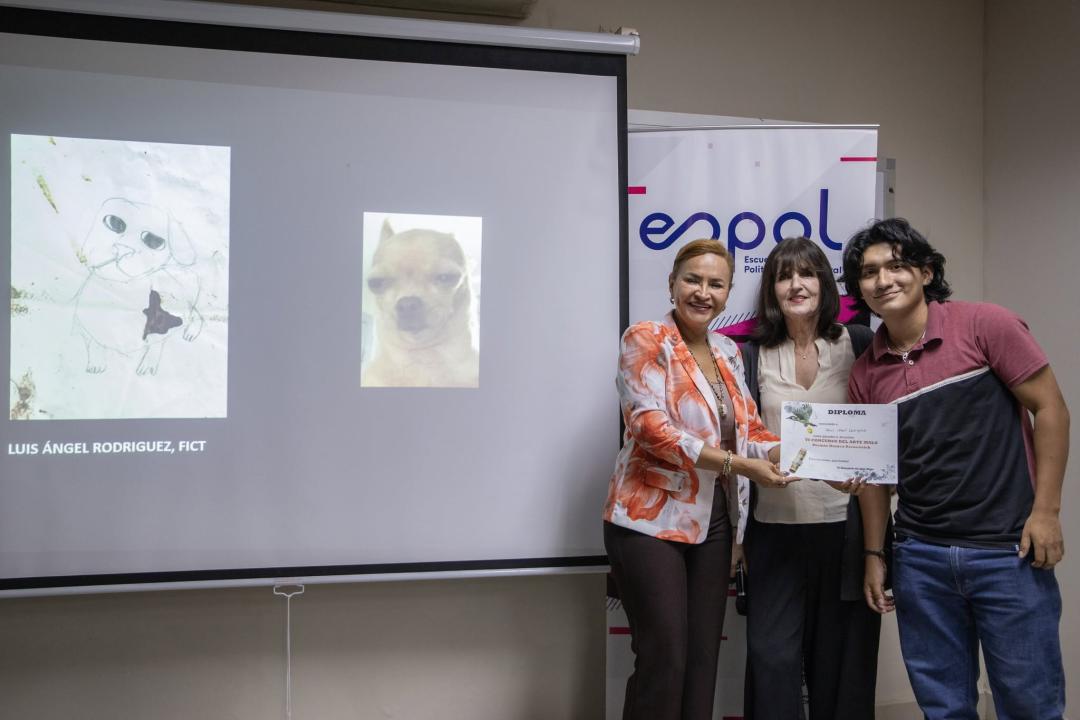
In this edition, José Luis Cedeño, from the Faculty of Earth Sciences Engineering (FICT), won first place and the Golden Egg. Second place, along with the Golden Shit, went to Pedro Vera from FADCOM. Meanwhile, Gabriel Córdova from the School of Electrical and Computer Engineering (FIEC) received the Xuxa Hall Award and the Golden Tomato for third place.
The artistic program featured Isabel Vargas, who performed the iconic dance from *El Pimpollo* by *Sharon La Hechicera*; Germayoli Cortéz and Luis Abraham Domínguez, with a fun version of “Olvídame y pega la vuelta” by Pimpinela; and Jeremy Naula, who performed “What’s Up” by 4 Non Blondes.
In keeping with the spirit of the event, all participants received a certificate officially recognizing them as “bad artists,” turning mistakes and imperfections into an opportunity to share, laugh, and strengthen unity within the university community.
Through initiatives like Arte Malo ESPOL, FADCOM continues to promote spaces where creativity, humor, and student participation become tools for fostering a sense of community and demonstrating that art can also be enjoyed without the pressure to be perfect.
© Photography & Text: José Luis Castro