

ESPOL, through an interdisciplinary team of faculty and students, carried out Phase III of the project “Interactions with Digital Games and Technologies for Education,” an initiative aimed at improving educational quality and reducing the digital divide in inclusive education settings.
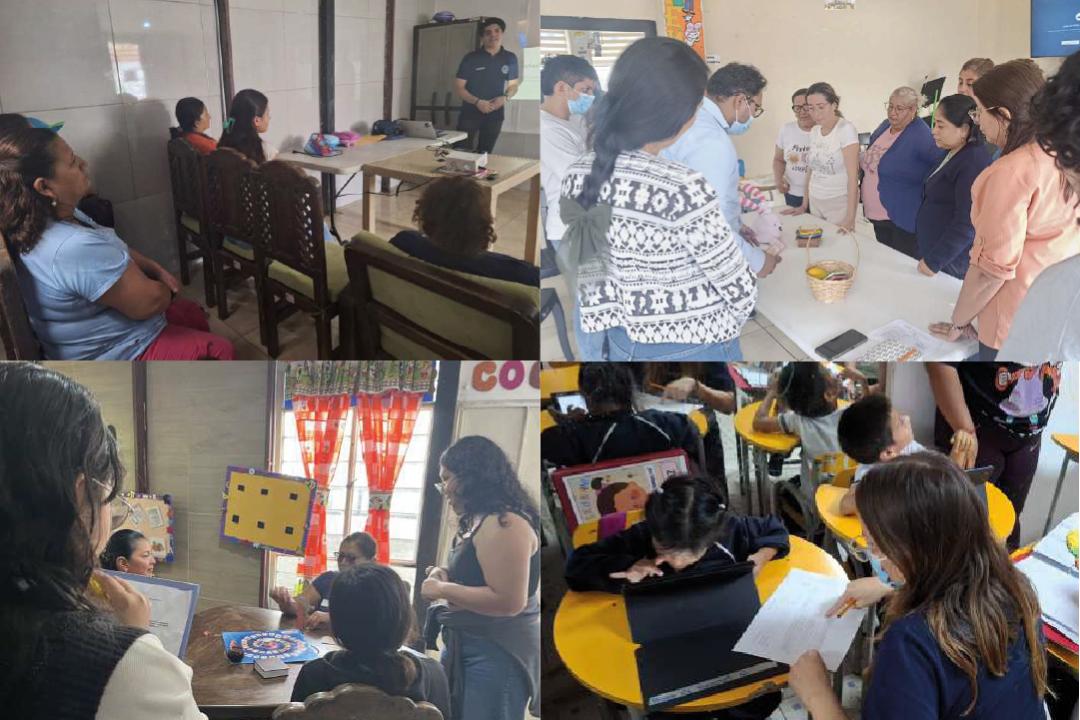
The project focused on the implementation and validation of educational technology tools—such as mobile apps, digital resources, and pictogram-based teaching materials—designed to facilitate learning for children and adolescents with disabilities. The project was carried out using the Service-Learning methodology, involving 22 students from programs such as Graphic Design, Media Production, Computer Science, Telematics, and Mechatronics, who worked directly with the educational community.
As part of the process, practical training sessions were held for teachers on the use of mobile apps and monitoring tools (dashboards), as well as workshops for mothers focused on digital skills and the responsible use of technology. In addition, inclusive educational resources were created, such as digital and physical stories with pictograms, mobile apps, and adapted recreational materials. Classroom monitoring allowed for the validation of these tools within the teaching-learning process, demonstrating their applicability in real-world contexts.
The project was carried out during 2025 at the Hogar de Nazareth Specialized Center, part of the Fe y Alegría Foundation, an institution that serves children with intellectual disabilities, autism, Down syndrome, and cerebral palsy. This initiative is significant because it addresses the need to strengthen inclusive education through accessible technologies, in a context where limitations in adapted resources and digital training still persist.
Added to this is the reality that many families face socioeconomic barriers that hinder their access to and effective use of technological tools, directly impacting the learning process. The project achieved 100% of its target indicators, reflecting a significant impact on the community: teachers integrating mobile apps into their lesson plans, high levels of digital skills training among teachers, students, and mothers, and enhanced student autonomy, communication, and learning.
Taken together, this experience demonstrates that educational innovation goes beyond technology, establishing itself as a model that brings together academic knowledge, social inclusion, and community engagement. It is worth noting that the project was presented by Georgina Manzano, M.Sc., a graduate of the first cohort of the Master’s in Art and Technology program, who is leading this initiative as part of her commitment to developing inclusive educational solutions.
© Photography: Courtesy/ Textción: José Luis Castro