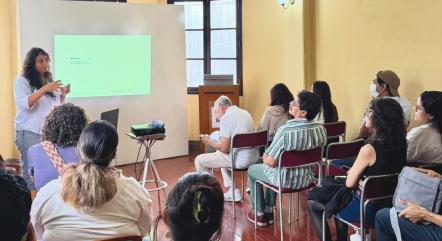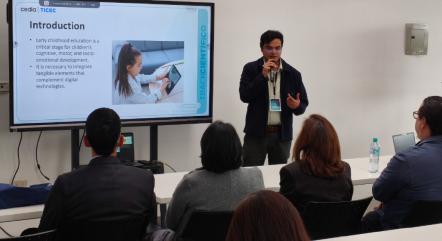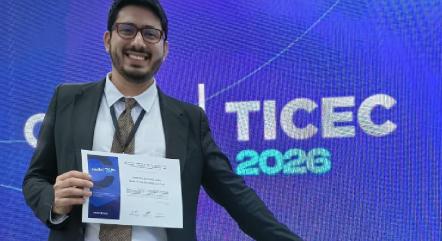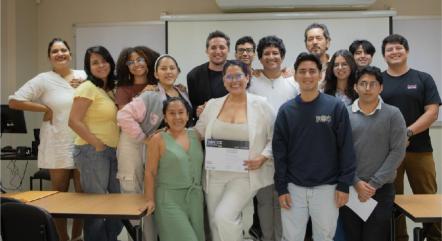


The 2025 International Design Workshop concluded with results that reflect creativity, academic cooperation, and a vision of design in the service of disaster prevention and response. This initiative was developed as part of the Art Direction course and arose from a collaboration between ESPOL and the University of Valparaíso (Chile).
This second edition welcomed a new academic partner: the National University of Asunción (Paraguay), expanding the exchange to three countries and strengthening the project’s educational scope. For six consecutive weeks, students from Ecuador, Chile, and Paraguay participated simultaneously through the courses Art Direction, Design Projects, and Ergonomics. The academic process was structured around mixed, international teams, each composed of representatives from the three institutions. The assignment was clear: to develop a three-minute audiovisual proposal demonstrating how design can prevent, guide, or assist in emergency situations.
The result was eight projects that addressed real and diverse needs, including soil conservation, the design of fire escape routes, tools to support older adults, and coping strategies for children facing traumatic experiences. Solutions to extreme heat exposure were also explored, among other issues currently on the region’s risk management agenda.
This collaborative effort fulfilled the workshop’s main objective: to provide students with a setting for intercultural exchange that would put their technical and interpersonal skills to the test. The experience fostered critical thinking, collaborative work, resilience, empathy, and self-regulation, confirming the value of international education as an essential part of design learning.
The academic program was led by a faculty team consisting of Raquel Langjahr (UNA), Omar Acevedo (UV), and Paula Pettinelli (ESPOL), who guided the conceptual, methodological, and creative development of each proposal. With this edition, ESPOL consolidates a project that champions design as a tool for social impact and views connections between countries as a driver of educational innovation.
© Text: Patricia Robelly