
The Escuela Superior Politécnica del Litoral (ESPOL), through its Faculty of Art, Design and Audiovisual Communication (FADCOM), implemented the third phase of the project ‘Popular graphics and visual thinking as allies of learning’, an initiative that consolidates an educational approach in which creativity, cultural identity and pedagogical innovation move beyond mere discourse to become a reality.
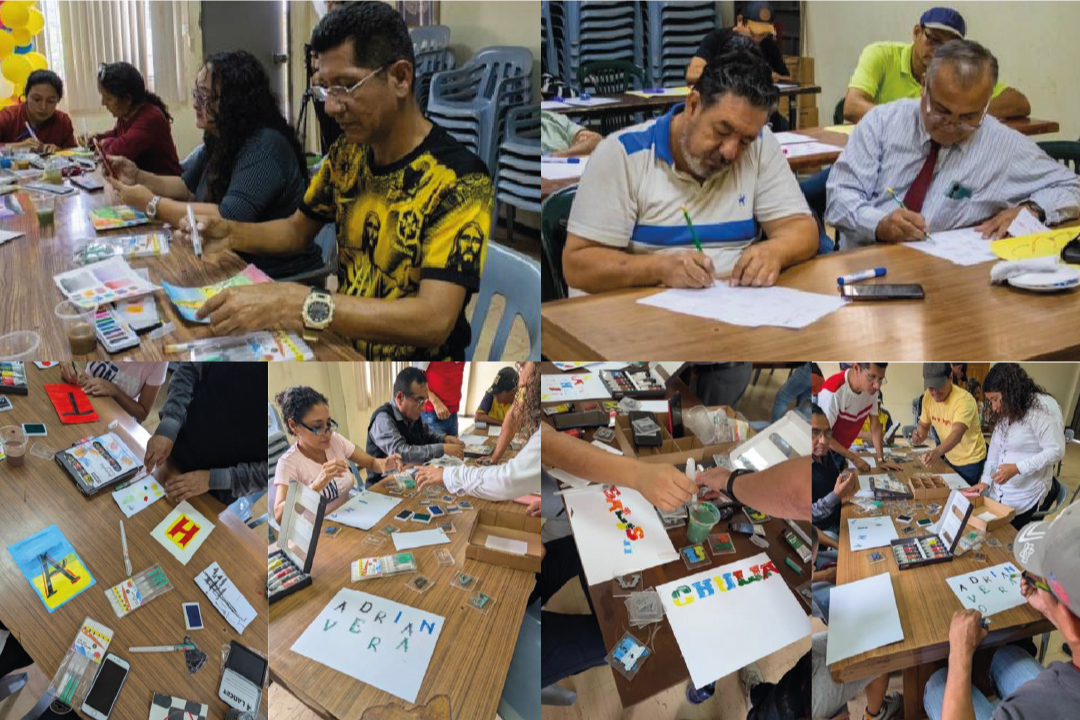
The project took place in 2025 at the Fe y Alegría Fiscomisional Educational Centre in Guayaquil, directly benefiting 20 teachers from Upper Secondary and Sixth Form levels, who took part in a training programme aimed at strengthening their creative and visual soft skills – key to transforming classroom dynamics. The project was implemented using a mixed-methods approach—combining qualitative and quantitative analysis—and a clear strategy: learning by doing. Through workshops on visual expression, visual thinking and popular graphic art, the teachers explored tools such as drawing, collage, painting, the use of typographic stamps and the creation of teaching resources based on elements of local visual culture.
At the same time, students from degree programmes such as Graphic Design, Media Production, Product Design, Business Administration and Archaeology were involved in the process through active and problem-based learning approaches. This model enabled not only the transfer of knowledge, but also the collaborative development of contextualised educational solutions. The result was striking: 100 per cent of teachers actively participated in individual visual expression exercises. 95 per cent applied tools from popular graphic art and painting as teaching resources.
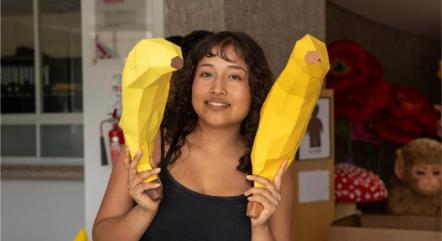
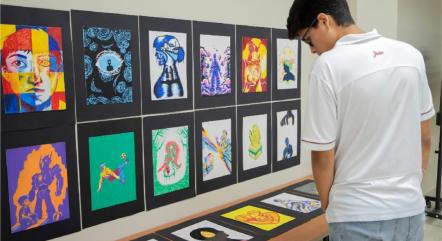
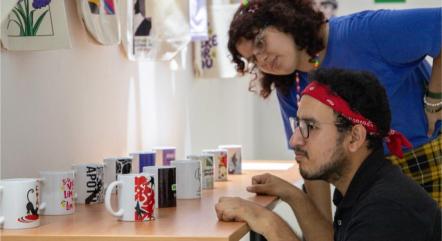
There was a significant increase in expressive confidence, visual creativity and the ability to design teaching materials. Furthermore, the project generated high-value tangible and intangible outputs: a methodological guide for teachers, structured workshops, sets of typographic stamps, visual pieces, audiovisual material and a final exhibition that showcased the creative processes developed. The critical point? Implementation in the classroom still requires further consolidation.
Although teachers demonstrated their skills in workshop and exhibition settings, independent and sustained application in real-world contexts remains the next level. Translated into corporate jargon: the pilot was a success; now it’s time to scale up. The underlying reason is clear. In working-class urban educational contexts, where the visual is not an accessory but the dominant language, integrating strategies of visual thinking and popular graphic art is not merely decorative innovation; it is a structural necessity.
Failing to do so means losing pedagogical engagement, limiting the connection with students and failing to harness the cultural potential of the environment. This project not only strengthens teachers’ skills but also positions education as a space where cultural identity, creativity and empathy cease to be abstract concepts and become concrete tools for meaningful learning.
© Photography: Courtesy / Text: José Luis Castro