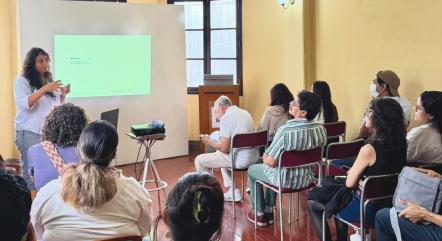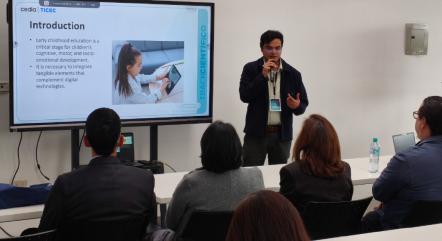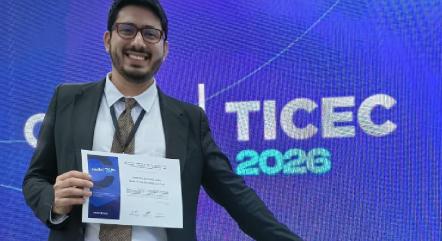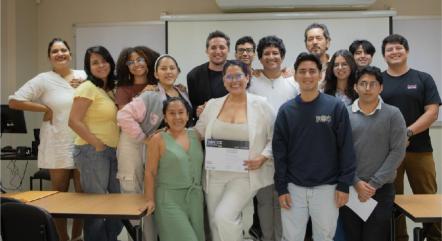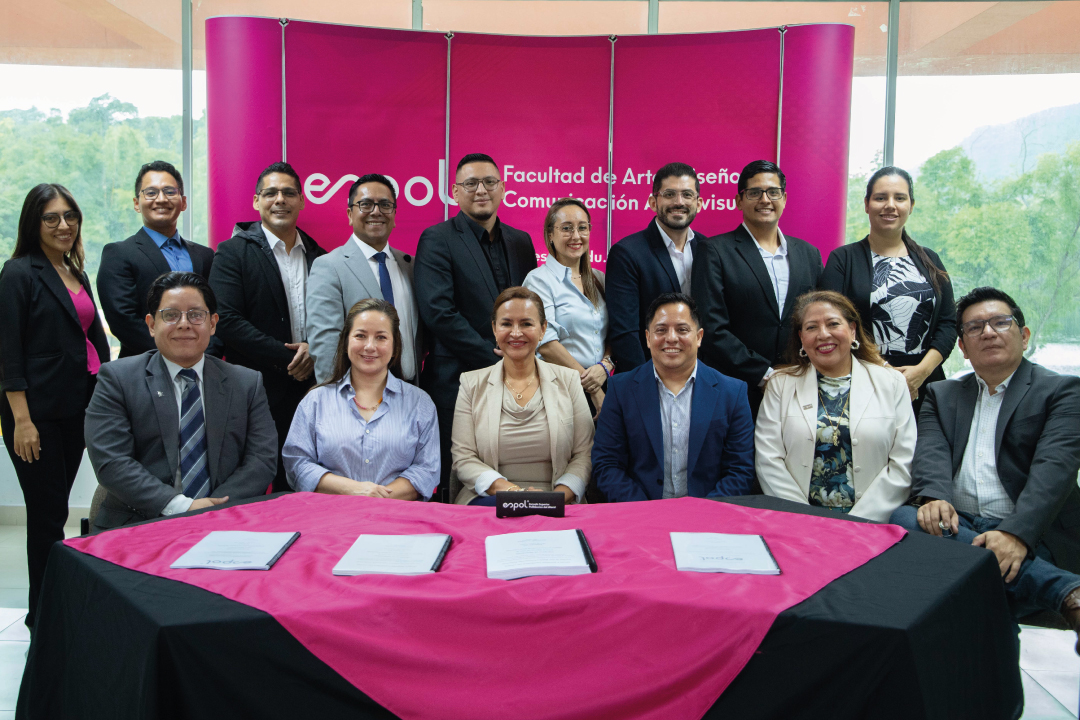


On Friday 12 June 2026, ESPOL’s Faculty of Art, Design and Audiovisual Communication (FADCOM) celebrated the graduation of the first cohort of the Master’s in Transmedia Brand Communication, a postgraduate programme that focuses on integrating strategic communication, applied research and innovation to address the challenges faced by contemporary organisations.
The day began in the morning with the defence of the final dissertations before the assessment panel. During their presentations, the Master’s students presented research based on real-world challenges faced by companies, institutions and regions, demonstrating the potential of transmedia narratives to generate innovative solutions and high-impact communication experiences. In the afternoon, the closing ceremony took place, during which the final marks were officially announced and the academic achievements of the first cohort of this Master’s programme were recognised. The final projects covered various areas of application for transmedia brand communication.
Cristian Andrés Bravo López presented the research paper *Transmedia Narratives and Territorial Branding for a Gastronomic Tourism Positioning Strategy for the Canton of Sucre, Manabí*, which proposes the branding strategy ‘Sucre, the flavour that captivates you’ to strengthen the canton’s identity and gastronomic tourism positioning. María Mercedes Kalil Granda and John Alexander Núñez Zúñiga developed the research project ‘Design of a Transmedia Branding Strategy and Phygital Convergence: An Experiential Storytelling Strategy for the New Luxury Segment. The Case of Las Fragancias’, a proposal that integrates transmedia narratives, omnichannel experiences and audiovisual content to strengthen the emotional connection between the brand and its consumers. John Alfredo Arias Villamar presented ‘Architecture of Transmedia Editorial Authority: A Storytelling Model Applied to Building Academic Legitimacy in Micro-Publishing Enterprises’.
Case study: Digráfica S.A., a research project aimed at consolidating the publisher’s digital authority and strengthening its position as a scientific benchmark. Meanwhile, Johnny Martín León Tenesaca developed the Narrative Innovation Model for community building within the university’s digital ecosystem. Case study: UNL Radio, proposing ‘UNL PLAY’, a transmedia communication model that promotes active student participation and the building of a university community. Marcela María Layana Castro presented ‘Designing a transmedia ecosystem through emotional storytelling to promote environmental education and civic engagement in the context of wildlife conservation’.
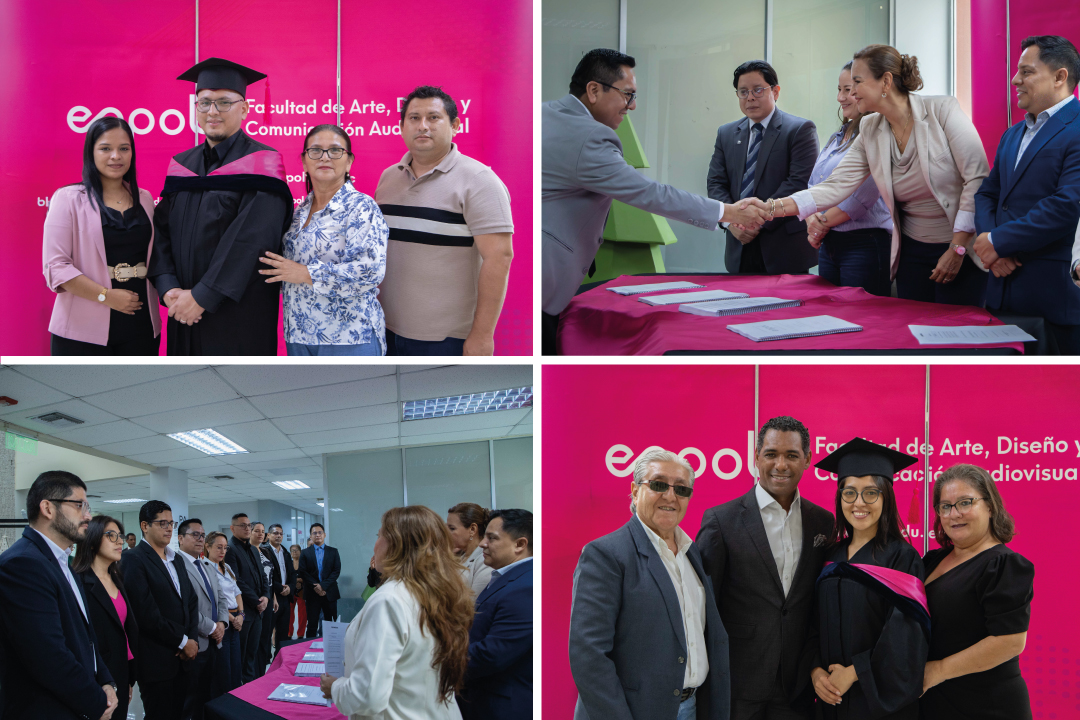
Case study: El Pantanal Zoo, a project aimed at raising public awareness of wildlife conservation through participatory narrative experiences and audiovisual content. Mariela Violeta Yánez Velasco and Jaime Badih Mera Reina developed ‘Transmedia Personal Branding: A Strategic Communication Model for the Employability of Polytechnic Graduates’. Case study: ESPOL’s Audit and Management Control degree programme, a proposal aimed at strengthening the professional branding skills and employability of future auditors. Furthermore, Marlene Janeth Cotapo Burgos presented ‘Narrative Architectures: A transmedia model based on the motivational mapping of applicants for brand positioning in postgraduate programmes’. Case study: FADCOM-ESPOL, a research project that received the highest mark in its cohort for its proposal of a transmedia communication ecosystem designed to strengthen the positioning of postgraduate programmes and create more engaging and interactive experiences for prospective students.
Neytan Kelly Gómez Carangui developed ‘Designing a phygital dining experience with transmedia storytelling to position themed restaurants in urban contexts’. Case study: Di María, a concept that transforms the menu into a physical-digital interactive experience to strengthen trust and the emotional bond with diners. Finally, Graciela Elizabeth Martínez Zambrano presented “Design of a transmedia communication strategy to strengthen the digital positioning of the Casa Bamboo brand on social media”, a research project that proposes a narrative ecosystem linked across digital platforms to generate more participatory and emotionally meaningful experiences for the brand’s users.
The graduation of this first cohort marks a milestone for FADCOM and ESPOL, as it consolidates an academic programme that promotes applied research and innovation in strategic communication. The projects carried out demonstrate how transmedia narratives can become tools for driving the development of brands, organisations, communities and regions from a creative, technological and human perspective.
© Photography: Patricia Robelly / Medardo Silva & Written: Redacción: José Luis Castro