

The Master’s Program in Brand Design and Management at ESPOL’s School of Art, Design, and Audiovisual Communication positions its graduate students within international academic circles through research that connects branding, culture, business, and heritage with real-world issues. Its graduate students do more than just conduct research: they engage, discuss, and publish.
Justine Mera: Latin American Identity and the Strategic Value of Branding
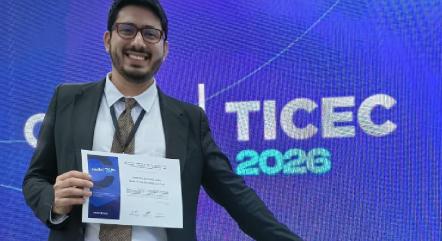
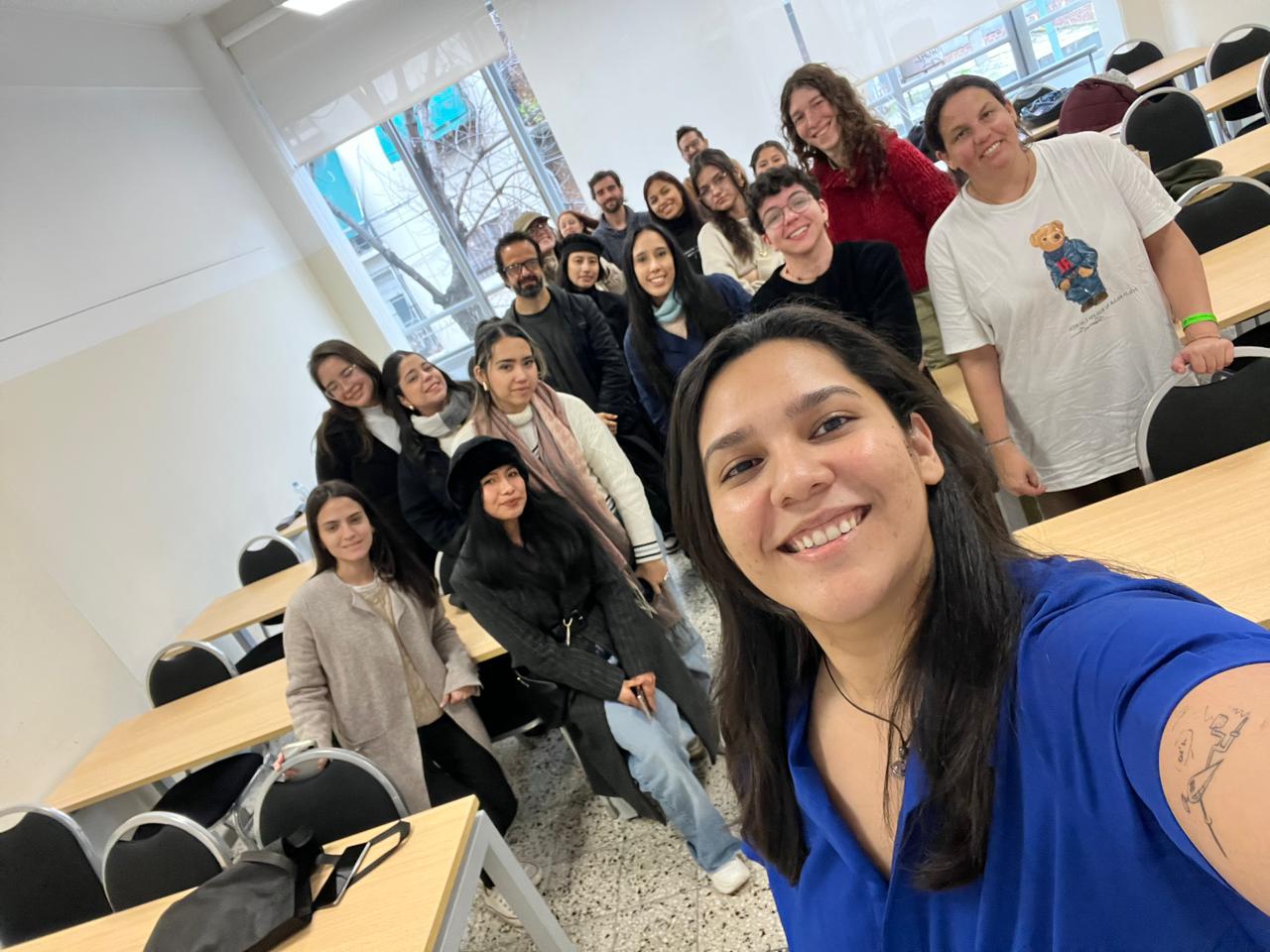
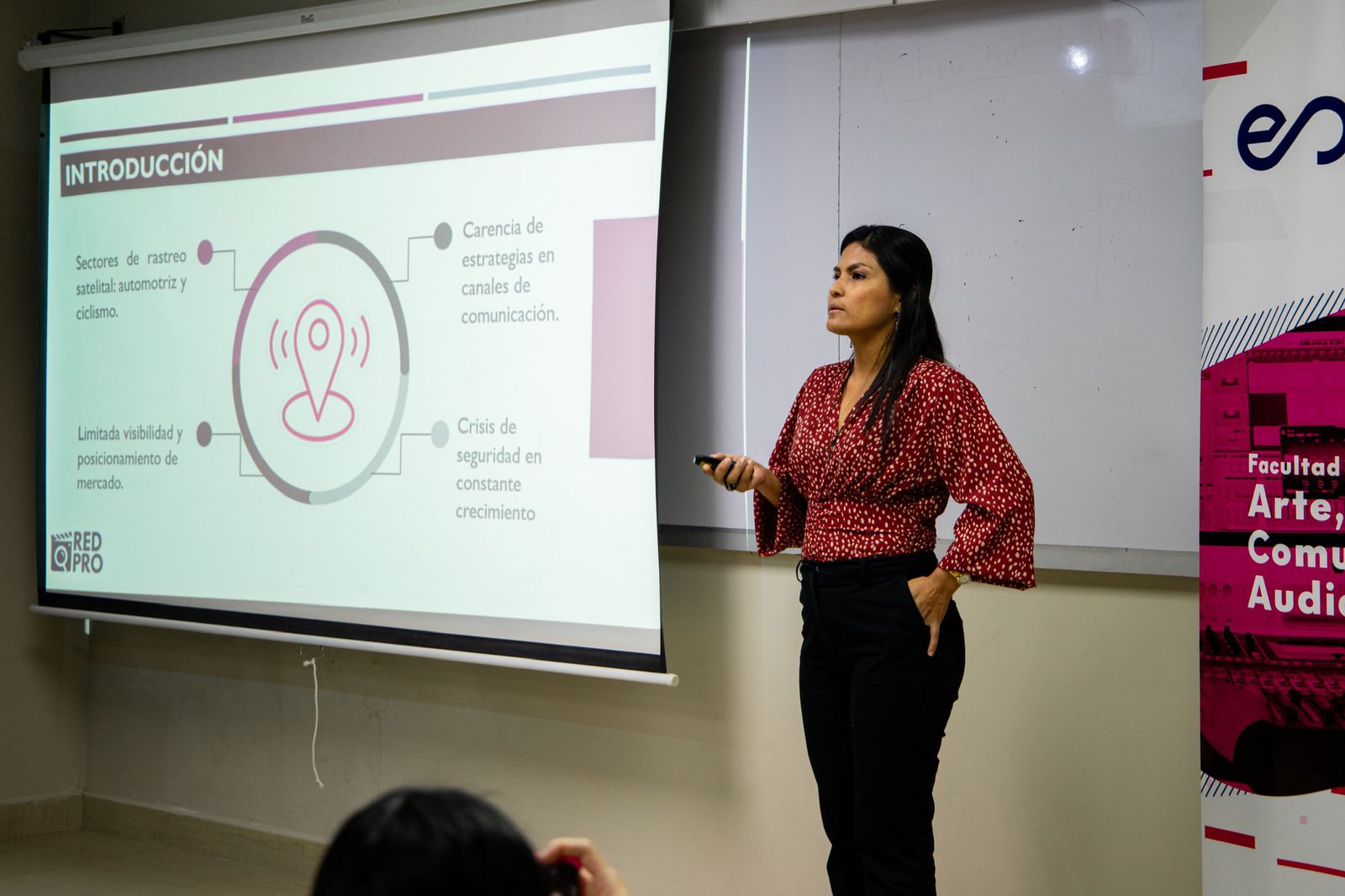
From July 14 to 19, 2025, Justine Mera participated in the International Congress on Design Education at the University of Palermo (Argentina). At the International Symposium, she addressed the role of Latin American design in the construction of its own body of knowledge, questioning the reliance on imported models. During her stay, she held an academic meeting with Óscar Echeverría, dean of the School of Design and Communication, to advance the potential inclusion of FADCOM–ESPOL in the Forum of Design Schools Network, which brings together more than 500 institutions worldwide. On July 19, he led a workshop focused on methodologies based on key indicators for communicating the economic value of design to business leaders. He presented a matrix powered by artificial intelligence to measure return on investment and translate branding into metrics that are understandable to the business sector. Her thesis, “Business Perception of Branding Strategies in SMEs in Guayaquil,” highlights a critical gap: many companies reduce branding to social media, while those that apply comprehensive strategies achieve greater market positioning and customer loyalty. The study proposes concrete tools to bridge that gap.
José Luis Castro: Heritage, Branding, and Contemporary Communication
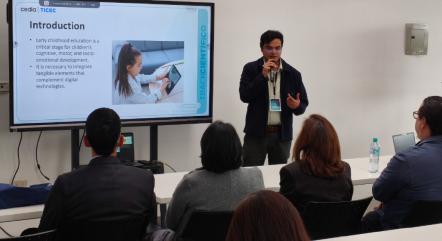
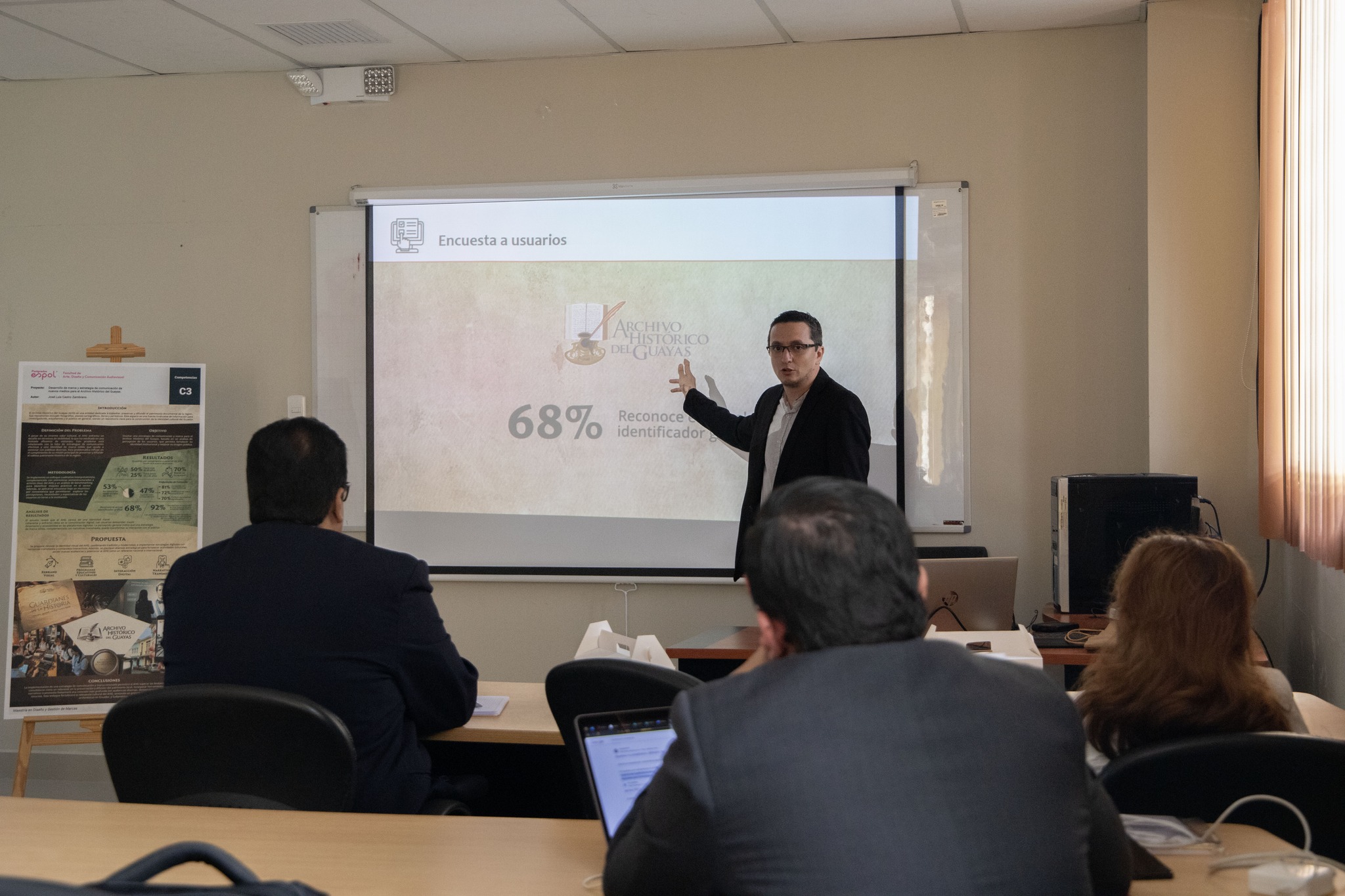
José Luis Castro presented the paper “Brand Development and New Media Communication Strategy for the Guayas Historical Archive,” which was approved by the Design Education Congress. His presentation took place on July 30, 2025, as part of Commission A33 on Cultural Innovation. The research proposes a comprehensive branding and communication strategy for the Guayas Historical Archive, combining audience analysis, interviews, and an evaluation of the digital ecosystem of heritage institutions. The result: a repositioning proposal that integrates a contemporary visual identity, transmedia narratives, and interactive content to expand access and cultural relevance. The project was also presented on November 6 at CIICATI 2025, co-organized by REDPRO and FADCOM–ESPOL. Additionally, it was selected as an academic article for the journal Ñawi, Vol. 9, No. 2 (2025), in the “Seduce and Excite” section. Castro is a graphic designer and audiovisual producer whose career has focused on cultural and heritage projects—recognized at international festivals—as well as digital innovation initiatives for museum institutions.
Pamela Sánchez: Product System and Sustainable Branding
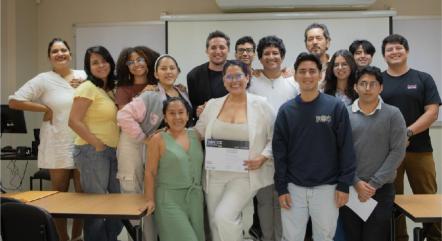
Katty Pamela Sánchez’s research, “Positioning Strategy for the Moon Rise Brand Through Product System Design,” was published in the journal Ñawi, Vol. 9, No. 2 (2025). The study demonstrates how a well-designed product system—visual identity, user experience, and sustainability—can redefine the positioning of an urban fashion brand. The proposal includes redesigning packaging with recycled materials, improvements in visual merchandising, and multichannel branding strategies aligned with responsible consumption. Pamela Sánchez holds a master’s degree in Design and Brand Management from ESPOL, with training in marketing and experience in brand positioning and redesign projects. These achievements confirm that FADCOM trains professionals capable of thinking strategically, engaging with the industry, making an impact on culture, and competing on the international stage.
© Photography: Cortesía / Text: José Luis Castro