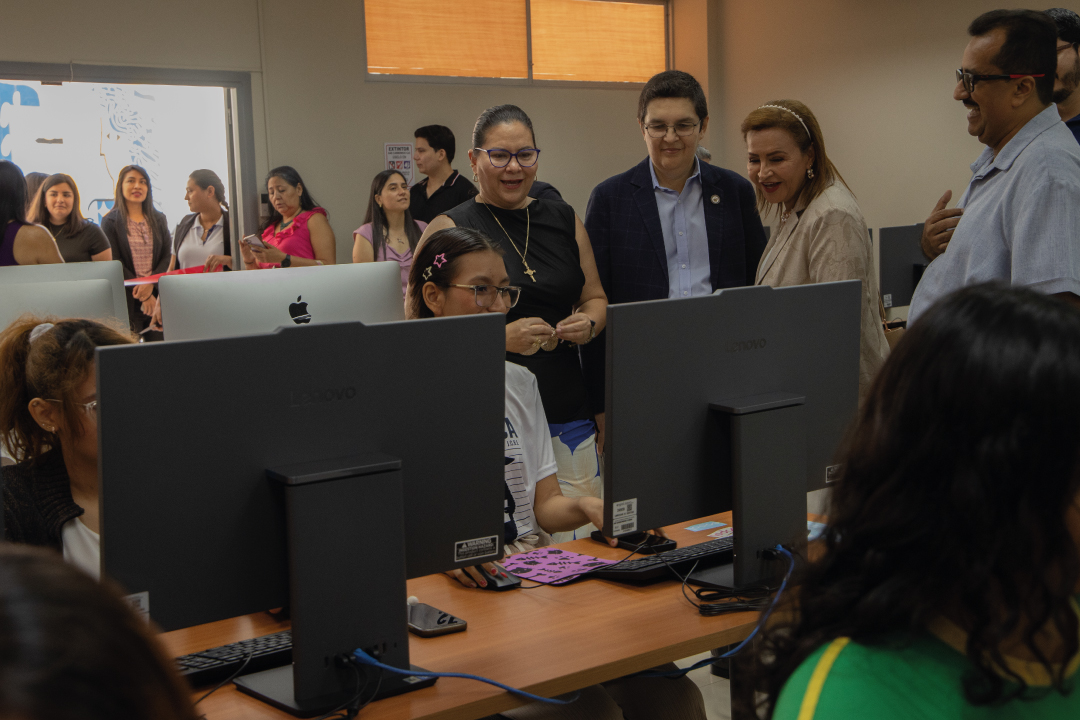


The Faculty of Art, Design, and Audiovisual Communication (FADCOM) at ESPOL inaugurated its new L-101 Lab on the first floor of Building 14B. This space is dedicated to the development of academic activities for the Faculty's programs and is equipped with specialized technology for graphic design and multimedia production.
The L-101 Lab was inaugurated during a visit by Dr. Cecilia Paredes Verduga, Rector of ESPOL; Dr. Carlos Monsalve, Vice-Rector of Research, Development, and Innovation; and Dr. Paola Romero, Vice-Rector of Teaching, who, along with Dr. Nayeth Solórzano, Dean of FADCOM, and M.Sc. Carlos González, the Faculty's deputy dean, toured the space and learned firsthand about the projects and processes developed by the students, highlighting the laboratory's contribution to their practical training and to the strengthening of creativity and innovation.
The new space features 22 state-of-the-art computers for multimedia design and production, purchased in 2026 and equipped with solid-state drives (SSDs) and specialized technology. In addition to this infrastructure, the lab has incorporated licensed specialized software such as Dragonframe, SolidWorks, and Adobe Creative Cloud, among other tools that expand the lab's capabilities for developing projects in design, animation, modeling, and digital production. This upgrade addresses the need to provide students with technological resources that meet the current demands of their professional training and the creative industries.
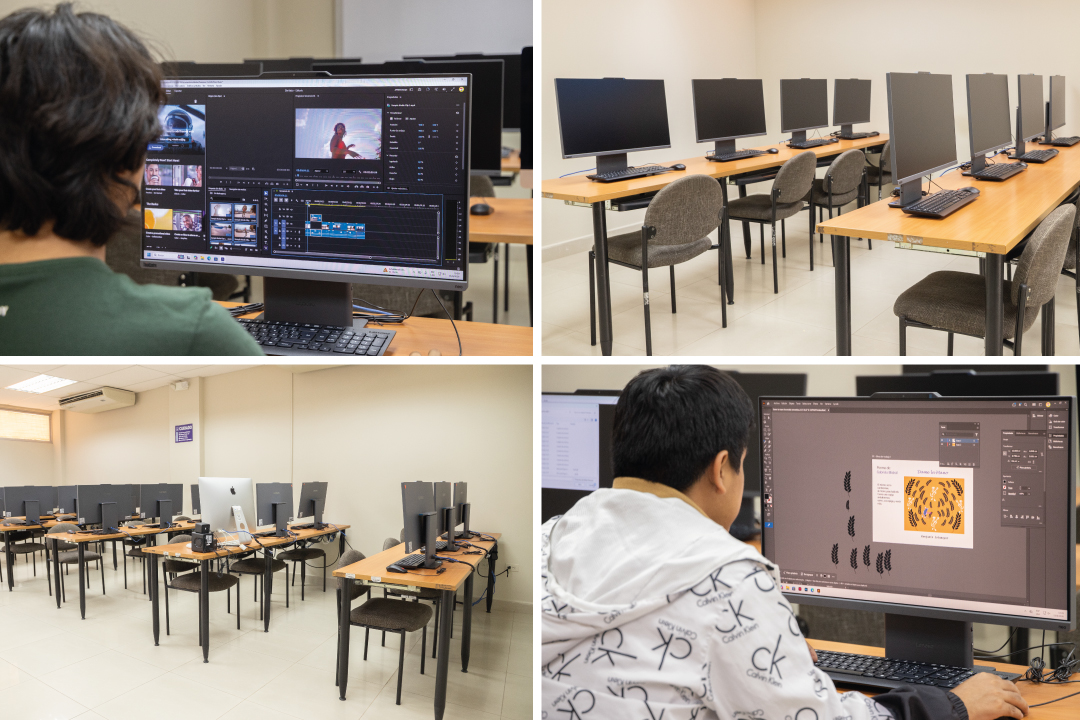
During the visit, students were working on academic projects linked to the real-world needs of small and medium-sized enterprises and family businesses. This experience demonstrated, in practice, the importance of specialized equipment for developing high-quality work and for introducing students to professional settings from the earliest stages of their training.
The academic proposal aims to help students develop technical skills that will allow them to work with real clients. In this way, projects currently being carried out with small businesses and startups can become experiences that prepare future professionals to take on projects of greater scope.
The implementation of the L-101 Laboratory thus strengthens FADCOM's academic infrastructure and expands students' opportunities to experiment, produce, and develop projects using technological tools aligned with the professional field.
More than a space equipped with new computers, the laboratory is an environment for transforming knowledge into concrete projects and for progressively bringing university education closer to the real dynamics of the professional world.
© Photography & Text: José Luis Castro