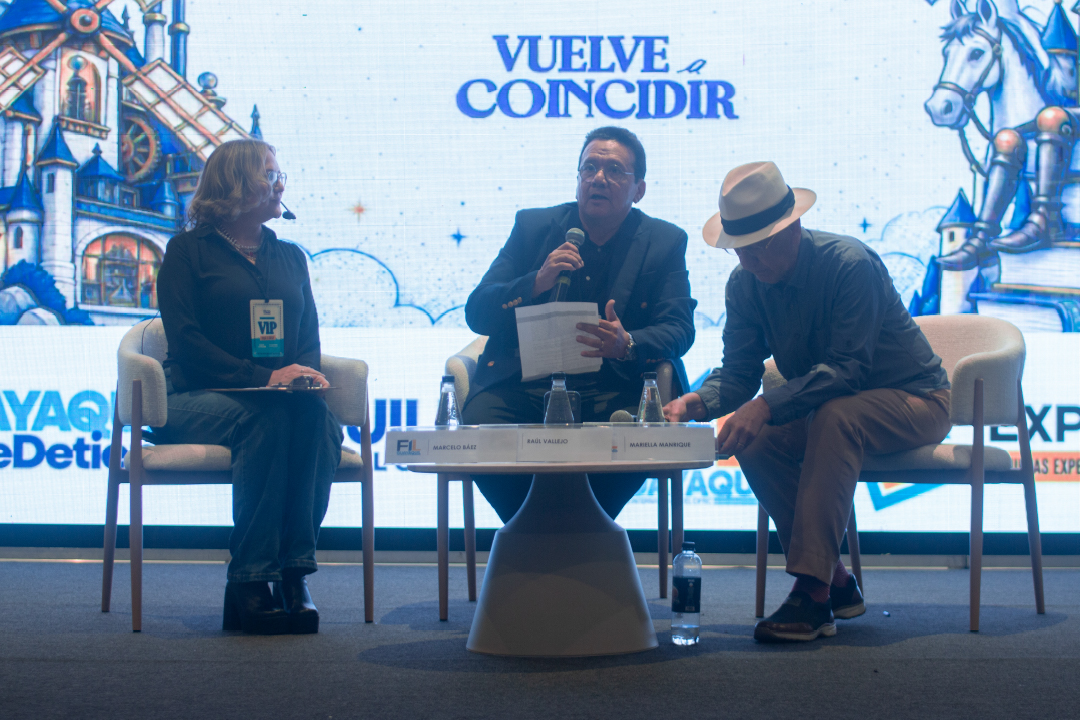


Marcelo Báez Meza, a writer and lecturer at ESPOL’s Faculty of Art, Design and Audiovisual Communication (FADCOM), presented his new book *This Book Was Not Written Using Artificial Intelligence*, an essay reflecting on the relationship between literature, writing and generative artificial intelligence systems. The work was published by the Ecuadorian Academy of Language (AEL). The presentation took place on Friday 18 September 2026, as part of the Guayaquil International Book Fair, at the Simón Bolívar Convention Centre. The launch included a discussion with writers Mariella Manrique and Raúl Vallejo, who discussed the ideas explored in the book.
The book stems from an explicit decision by its author: it was written without the use of generative artificial intelligence. From this perspective, Báez Meza examines the impact these technologies have on literature and raises questions about the relationship between automated tools and human creative processes. The book is not presented merely as a discussion of whether to embrace or reject artificial intelligence, but as a reflection on the changes that generative systems bring to writing and on the criteria that should guide their use. Among other topics, the author raises the need to consider the limits and ethical conditions of the relationship between literary creation and technology.
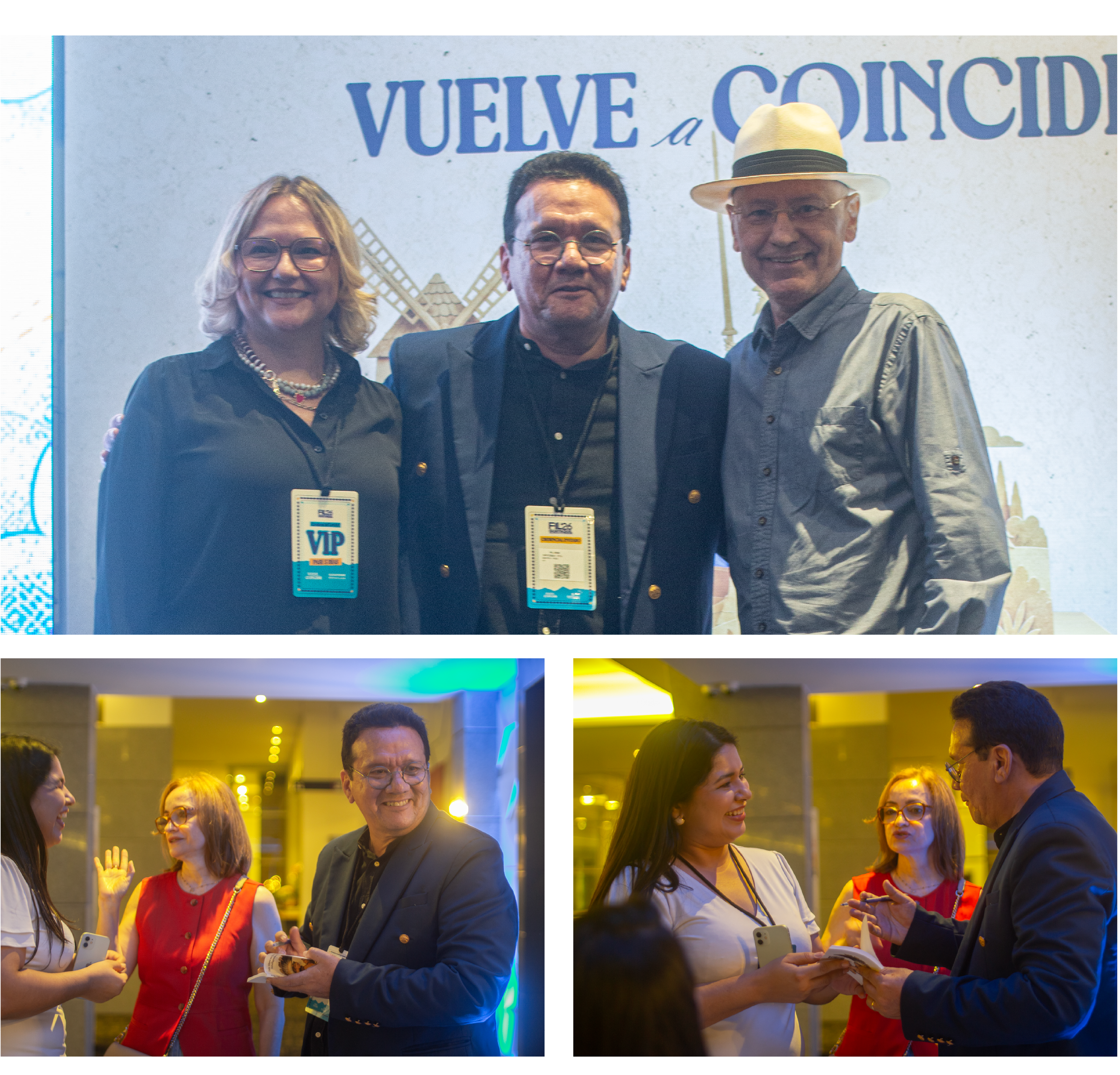
The essay also explores concepts relating to Literature 4.0 and non-creative writing, inviting the reader to consider which elements of the human experience play a part in the creation of a literary work and how these can coexist with new technological tools. The book’s cover and interior thumbnails were designed by Daniel Castelo Tai Ing, a lecturer at FADCOM, with professionals from the Faculty contributing to the publication’s graphic design. During the launch, attendees took part in a discussion centred on the book’s themes and, at the end, the author handed out copies and signed and dedicated them to readers.
With this publication, Marcelo Báez Meza adds a new title to his literary career. The work is his twentieth book and joins a body of work that includes poetry, fiction, essays and film criticism. The book launch also provided an opportunity to address, through the lens of literature, one of the contemporary debates surrounding technology: how to incorporate artificial intelligence tools without losing sight of the human, cultural and ethical dimensions of creative work.
© Photography and text: José Luis Castro