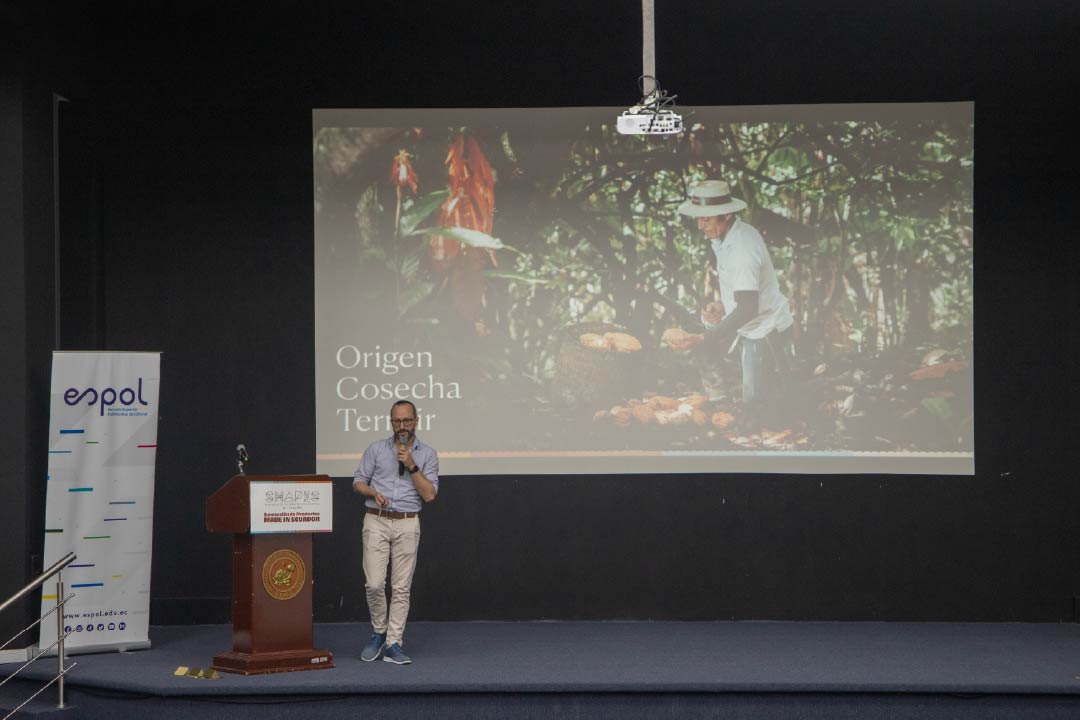


The ninth edition of the FADCOM–ESPOL Product Design Symposium brought together academia, the business sector, and professionals to reflect on the possibilities of designing, innovating, and creating value from Ecuador.
The ESPOL School of Art, Design, and Audiovisual Communication (FADCOM) hosted the ninth edition of SHAPES, the Product Design Symposium, under the theme “Product Innovation: Made in Ecuador.” The event brought together students, faculty, professionals, and representatives from companies and institutions to share experiences and reflect on the role of design in creating value and developing products in Ecuador.
The event took place on Thursday, September 3, 2026, in the FIEC Auditorium on ESPOL’s Gustavo Galindo Campus in Guayaquil. The program included four lectures, a networking session, and the presentation of FADCOM initiatives aimed at strengthening the connection between academia and the professional and productive sectors.
Experiences That Create Value from Ecuador
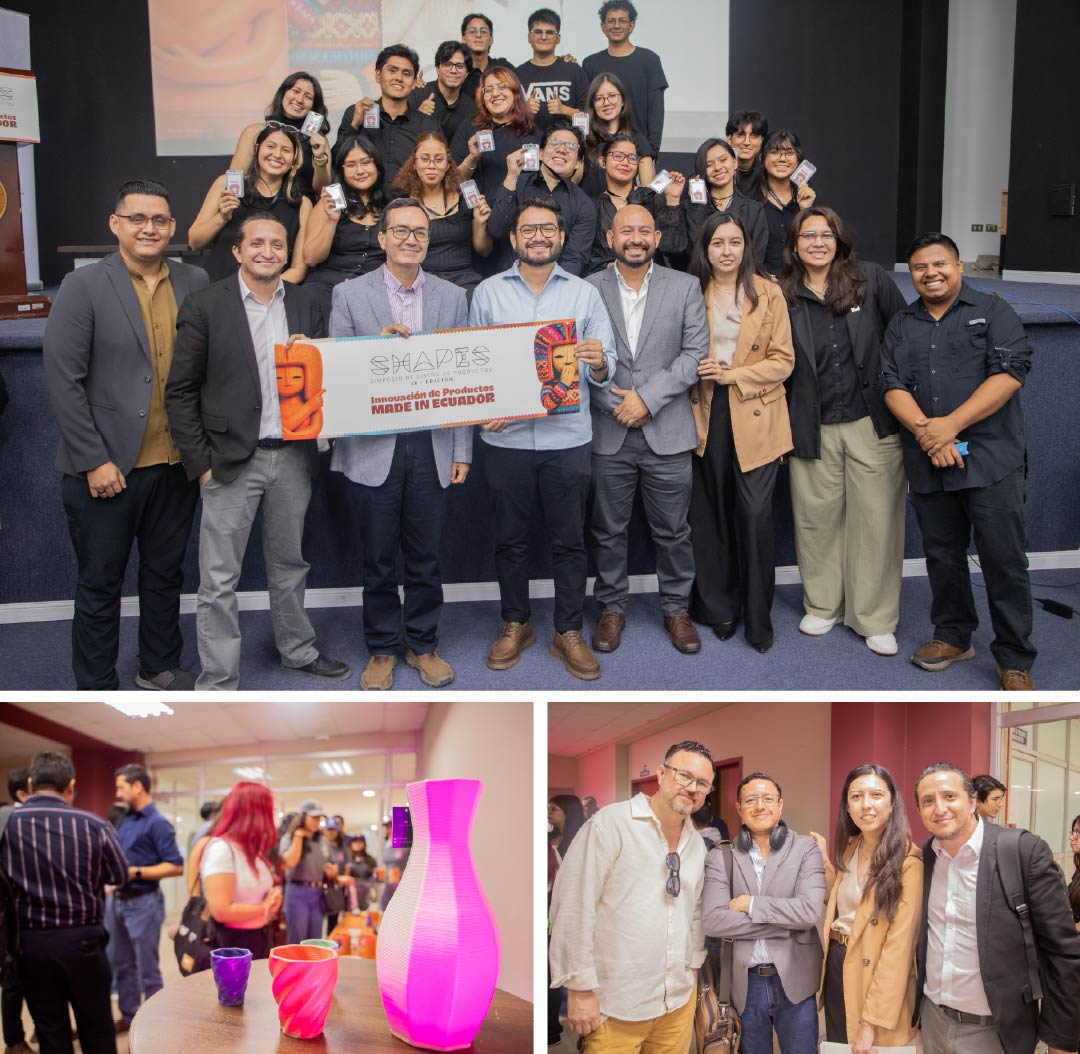
The opening ceremony was led by Carlos González Lema, M.Sc., Acting Dean of FADCOM, who welcomed the participants and highlighted the importance of creating spaces that connect academic education with the needs, challenges, and opportunities of the surrounding community.
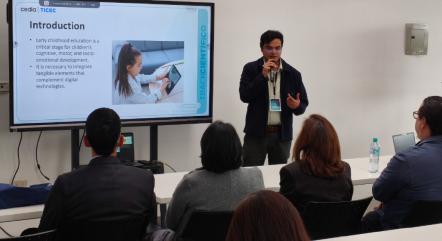
The program continued with four presentations that explored different ways of understanding and developing the “Made in Ecuador” concept, drawing on experiences related to craftsmanship, brand building, digital manufacturing, and computational methodologies.
Mario Costales, from ArteOrrala, shared his experience working with ceramic artisans on the Santa Elena Peninsula. His presentation demonstrated how design can help generate value in products rooted in traditional knowledge and practices, as well as expand their market potential in international markets. He also highlighted collaborative work with product designers to develop new concepts and strategically strengthen ceramic production.
For his part, Carl Schweizer, from To’ak Chocolate, presented the brand’s experience and the process that enabled it to bring an Ecuadorian product to other countries. His presentation demonstrated how value creation, the development of a differentiated offering, and brand positioning can help generate marketing opportunities in international markets.
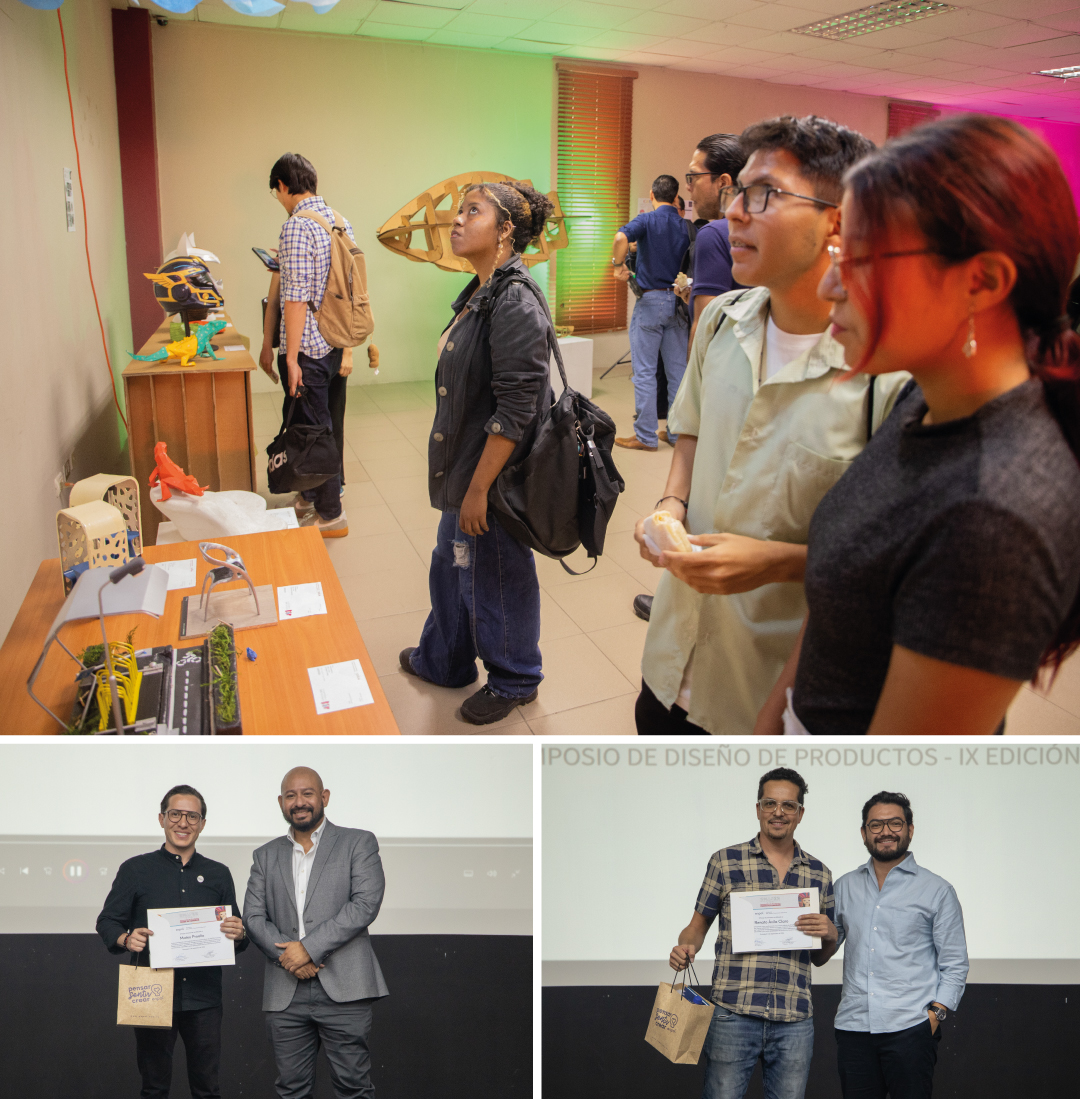
Technological innovation was addressed by Renato Ávila Claro of Automater, who presented experiences related to 3D printing and digital manufacturing in Ecuador. During his presentation, he highlighted experimentation with new materials—including ceramics—and the possibilities these technologies offer for developing products and exploring new production alternatives within the country.
Finally, Mateo Proaño of ACIMCO discussed the application of computational methodologies in architecture, demonstrating how digital tools and processes can be incorporated into the design and development of solutions. His presentation highlighted new possibilities for integrating technology, computational thinking, and design into creative processes.
These four presentations provided insights into the “Made in Ecuador” concept from different perspectives, demonstrating that creating products within the country involves not only manufacturing but also developing knowledge, incorporating technology, strengthening national identity, and finding new ways to create value.
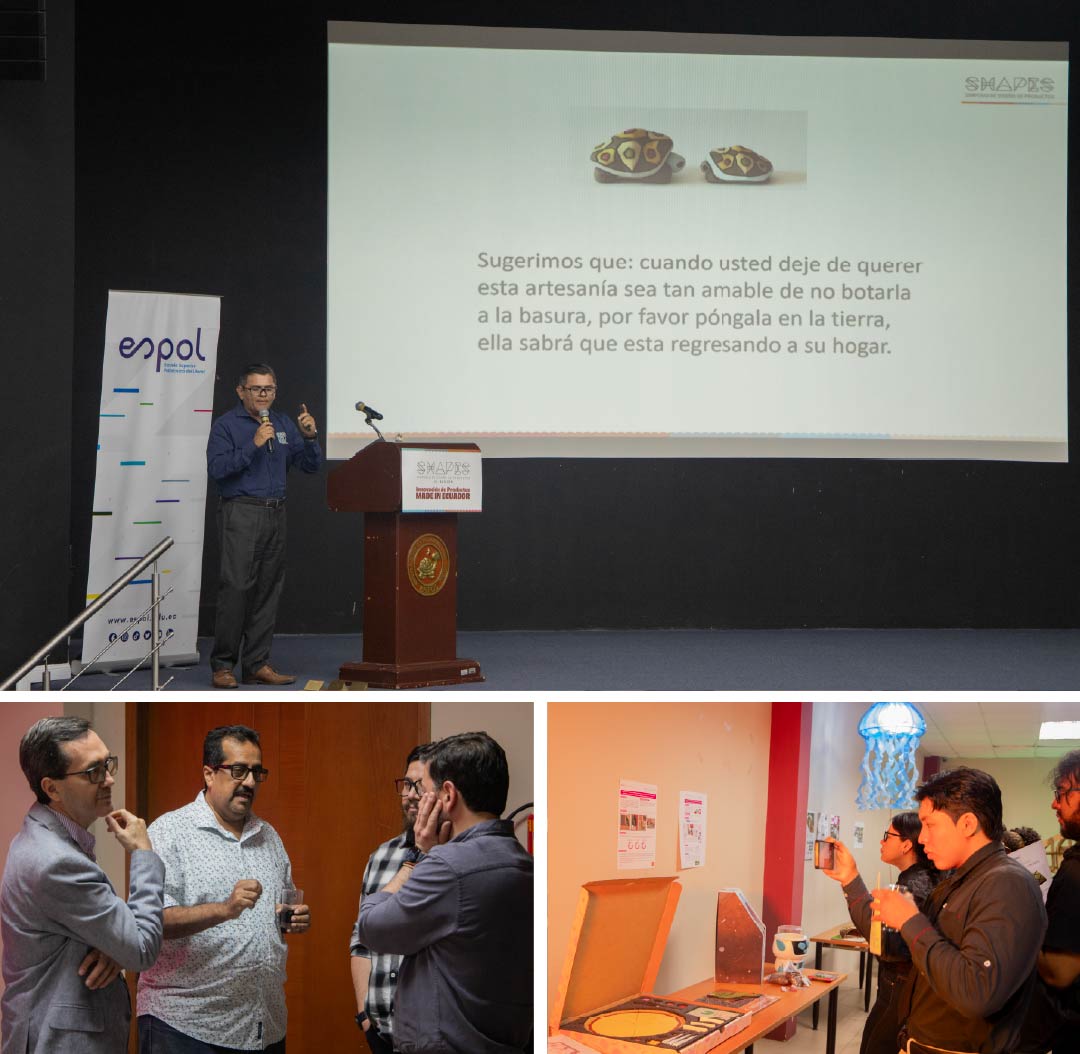
Networking to Build New Connections
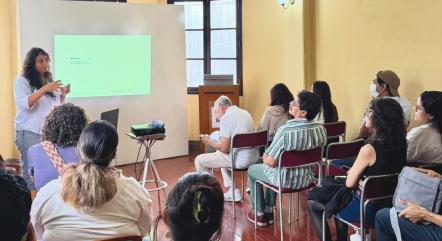
Following the first two presentations, a networking session took place, during which students, faculty, professionals, and representatives from companies and institutions were able to meet one another, exchange experiences, and share ideas about design and innovation.
This session fostered new conversations and connections among participants, creating opportunities to build future relationships, collaborations, and partnerships. In this way, SHAPES established itself not only as a forum for sharing knowledge but also as a meeting place for various stakeholders involved in product design and manufacturing.
FADCOM connects its capabilities with the surrounding environment
As part of the program, the Multiformat Creative Services Center was presented—an initiative that harnesses FADCOM’s capabilities and expertise to address the needs of the professional and productive sectors.
Integrative Course projects were also presented, demonstrating how students apply the knowledge acquired during their studies to develop proposals linked to real-world needs and challenges.
These initiatives complemented the lectures and reinforced the importance of connecting academic training with opportunities outside the classroom, creating spaces where the knowledge and skills developed at FADCOM can be applied to the real world.
A Look at the Future of Product Design
The day’s proceedings were concluded by Paola Romero, Ph.D., Vice Rector for Academic Affairs at ESPOL, who emphasized the importance of continuing to promote opportunities for interaction and collaboration among the university, the business sector, and society.
With this ninth edition, SHAPES reaffirms its mission to create opportunities for interaction centered on product design and to strengthen ties between academia and the business sector.
Under the theme “Product Innovation: Made in Ecuador,” SHAPES 2026 revealed a common thread among the various experiences presented: the value of products made in Ecuador lies not only in the place where they are manufactured, but also in the knowledge, design, creativity, technology, and innovation that make it possible to develop them within the country and bring them to the world.
© Photography: Miguel Ángel Vergara/ Raul Ruiz Text: José Luis Castro