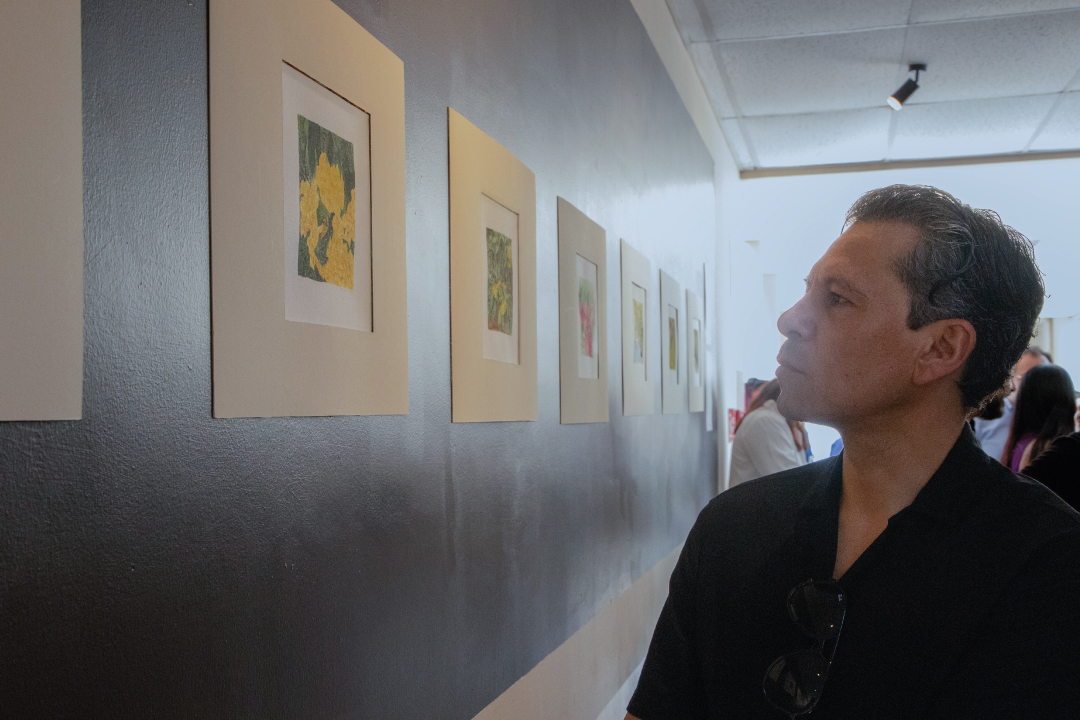


The Faculty of Art, Design and Audiovisual Communication (FADCOM) of ESPOL inaugurated its External Galleries. This initiative expands opportunities to exhibit students' academic and creative production and integrates art and design into the everyday spaces of the university community.
The new galleries are located in the corridors of levels 0, 1, and 2 of FADCOM, circulation spaces now incorporated into the Faculty's exhibition dynamics. The proposal seeks to leverage these spaces to bring classroom productions closer to students, teachers, visitors, and other members of the university community.
During the inauguration ceremony, Dr. Cecilia Paredes Verduga, Rector of ESPOL, cut the ribbon and highlighted FADCOM's evolution and the transformation of its spaces. She also congratulated the Faculty community for their participation in the reinterpretation and appropriation of these spaces.
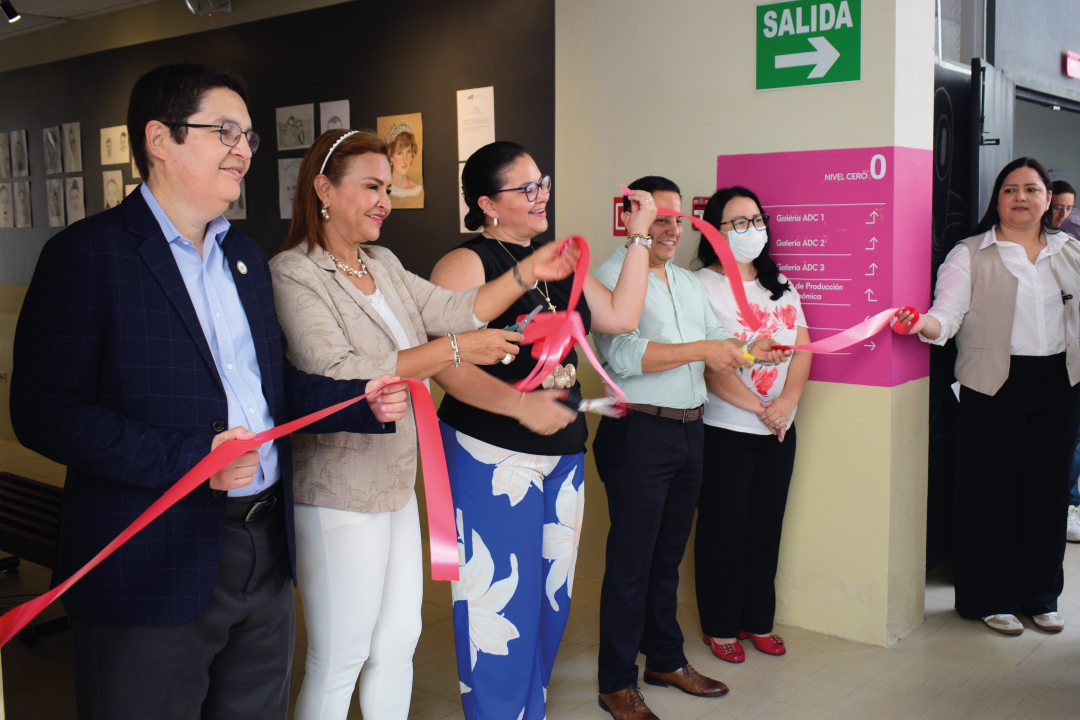
Dr. Nayeth Solórzano, Dean of FADCOM, emphasized the students' commitment and expressed special gratitude to those who participated in creating and selecting the proposals that now comprise the External Galleries. These include works developed in the courses Pictorial Techniques and Drawing II, taught by Professor Billy Soto in External Gallery 1 and External Gallery 2, as well as the Drawing II exhibition, led by Professor Alla Kondratova, in the External Gallery on Level 0. Their contributions transformed these circulation spaces into new venues to showcase the academic and creative work that takes place daily at the Faculty.
The implementation of the External Galleries responds to the need to create new spaces to showcase student work and take it beyond the classroom. In this way, their productions can connect with diverse audiences and become an active part of the Faculty's daily life.
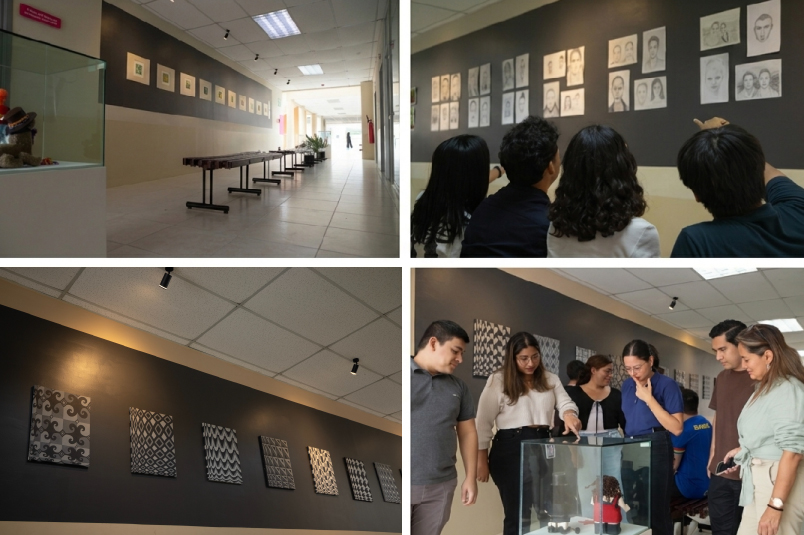
This initiative also includes a practice common in universities worldwide, where campus spaces are used to exhibit students' work, foster greater community interaction, and give authors opportunities to explain the processes, concepts, and decisions that shaped their proposals.
The External Galleries thus represent a new way of relating academic production to the university space: taking students' work outside the classroom, making it visible, and generating opportunities to share it and engage in dialogue about it.
© Photography & Text: José Luis Castro